10 free tools. Zero signups. Your files never leave your browser.Open the Viral Lab →
How US creators actually get paid in 2026: YouTube AdSense, TikTok Creator Rewards, Instagram, brand deals and affiliates, plus 1099s and taxes.
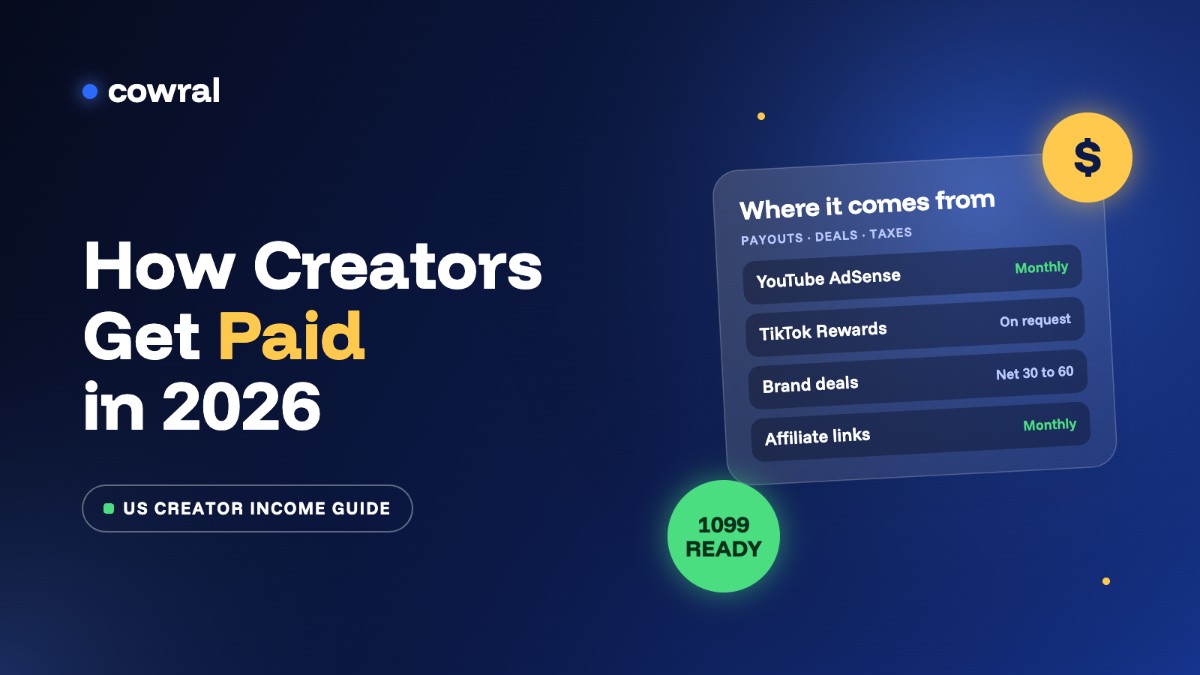
The first time a creator gets paid, it’s usually a surprise in both directions. The YouTube money is smaller than the dashboard made it look, the brand deal takes two months to arrive, and nobody mentioned that none of it has taxes taken out.
This guide walks through how the money actually reaches your bank account in 2026 if you’re a creator in the US: what each platform pays for, when and how it pays out, how brand deals and affiliate links work, and the tax basics that catch most first-year creators off guard. If you’re in Europe, most of the platform side is the same, and there’s a short section for you near the end.
Key takeaways
| Income source | Who pays you | How it arrives | Typical timing |
|---|---|---|---|
| YouTube ads (long-form and Shorts) | Google, through AdSense | Direct deposit | Monthly, once you pass $100 |
| TikTok Creator Rewards | TikTok | Withdraw from your TikTok balance | After you request a withdrawal |
| Brand deals and sponsorships | The brand or its agency | ACH, PayPal, wire, or a creator platform | Often 30 to 60 days after posting |
| Affiliate links | The retailer or affiliate network | Direct deposit or PayPal | Monthly, after returns clear |
| Your own products | Your customers | Stripe, Shopify, Gumroad and similar | Usually within days |
| Subscriptions, gifts, tips | The platform | Platform payout | Varies by platform |
For most creators, the order of importance is the opposite of what the dashboards suggest. Platform payouts are visible and steady but small. Brand deals and your own products are lumpier, and they’re where most of the money comes from once you have a defined audience.
To earn from ads on YouTube you need to be in the YouTube Partner Program. Once you’re in, earnings collect in an AdSense account linked to your channel.
How payouts work, according to Google’s AdSense payment timeline: your earnings are finalized at the start of each month, and if your balance has reached the payment threshold with no holds on it, Google issues the payment between the 21st and the 26th. In the US that threshold is $100 and the payment goes to your bank by direct deposit. If you’re under $100, the balance simply rolls over to the next month.
Before your first payment you’ll need to verify your address with a PIN Google mails to you, add your bank details, and submit your tax info. US creators fill in a W-9 inside AdSense. Skip it and Google can withhold tax from your payments.
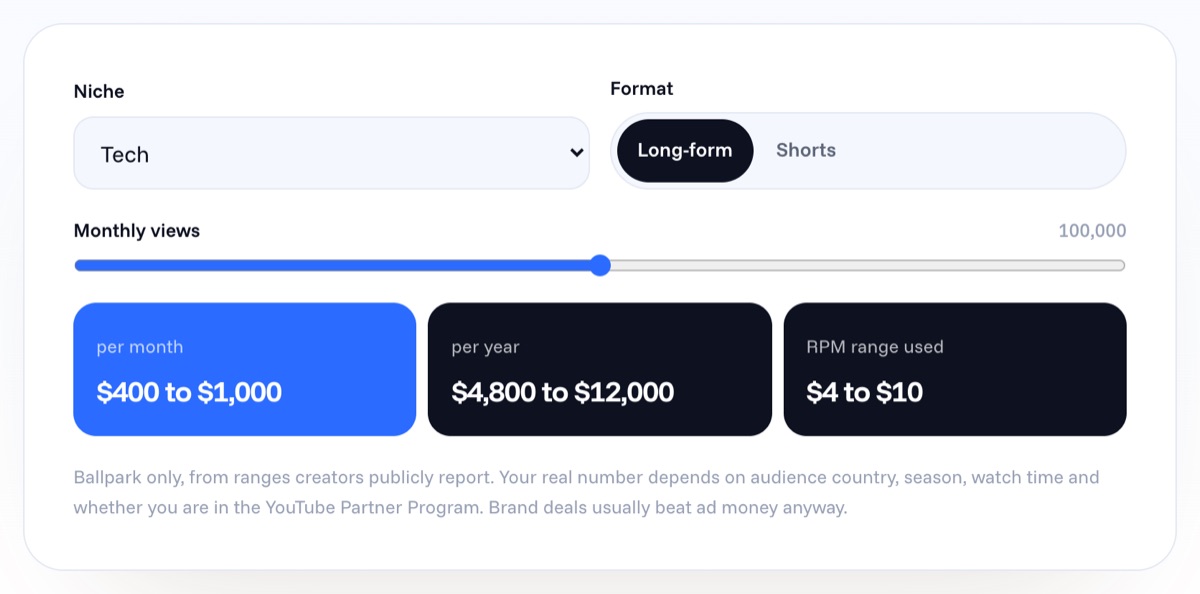
Shorts pay much less per view than long videos, so don’t judge YouTube by your Shorts numbers alone. Our free Creator Money Calculator shows ballpark ranges for long-form and Shorts by niche.
TikTok’s main payout program is the Creator Rewards Program. Requirements change, so check the Creator Rewards section in TikTok Studio, but in the US it has generally asked for an account in good standing, aged 18 or over, with at least 10,000 followers and 100,000 video views in the last 30 days. Only original videos longer than a minute earn, and only after you join.
You withdraw earnings from your TikTok balance in the app. Payout methods vary by account, so check what’s available to you before you plan around it.
Here’s the honest part: for most mid-size TikTok creators, Creator Rewards is a nice extra, not a living. TikTok creators who earn well usually do it through brand deals, TikTok Shop affiliate commissions, LIVE gifts, and sending their audience to something they own.
Instagram doesn’t pay creators a share of Reels ad revenue the way YouTube does. Bonus programs have come and gone and have mostly been invite-only, so don’t plan around one.
What does work on Instagram: brand deals, affiliate links, subscriptions and gifts where they’re available to you, and selling your own products or services. Meta also runs monetization programs on Facebook, which some creators use alongside Instagram. Check the Professional Dashboard on each app for what your account is eligible for.
Brand deals are where most creators make their real money, and they’re also where payment gets messy.
You’ll usually invoice. Most brands and agencies ask you to send an invoice after the post goes live, along with a W-9 so they can report what they paid you. Some pay through creator platforms that handle the invoice for you.
Expect net 30 to net 60. “Net 30” means they pay within 30 days of your invoice. Big brands and agencies often take longer. Put the payment terms in the contract before you post, along with what happens if they’re late.
Payment methods. ACH bank transfer is the most common for US brands, followed by PayPal and wire transfer. PayPal is convenient but takes fees, so factor that into your rate.
Read the usage rights. If a brand wants to run your video as a paid ad or use it on their site, that’s extra value, and it should cost extra. Price it as a separate line in your quote, and put an end date on it.
And always disclose paid partnerships. The FTC’s Disclosures 101 for social media influencers is short and clear: if a brand paid you, gave you something free, or you have another connection to it, say so in the video and the caption, not just in a hashtag at the end.
Affiliate links pay you a commission when someone buys through your link: Amazon Associates, TikTok Shop, LTK, and individual brand programs are the common ones. Commissions usually pay monthly, once returns have cleared, by direct deposit or PayPal.
Affiliate works best when it matches what you already make. A cooking creator linking the exact pan they use converts far better than a random “my favorites” list.
None of the money above has tax taken out. As a creator you’re usually self-employed, which means a few things. This is general information, not tax advice, so talk to a tax professional once the money gets real.
Self-employment tax. On top of income tax, you pay self-employment tax for Social Security and Medicare, currently 15.3% on most net earnings.
Quarterly estimated taxes. If you expect to owe $1,000 or more for the year, the IRS generally expects you to pay estimated taxes quarterly instead of all at once in April.
The forms you’ll see. Brands that pay you $2,000 or more in 2026 should send a 1099-NEC (the threshold went up from $600 this year, according to the IRS). Payment apps and card processors report on a 1099-K, and the federal threshold for that is back to more than $20,000 and more than 200 transactions (IRS). Either way, income below those thresholds is still taxable. You’re expected to report all of it.

Keep records from day one. A separate bank account for creator income, plus a simple spreadsheet of what came in and what you spent on gear, software and editing, will save you hours in April.
Set aside a percentage of every payment
Many creators move a fixed share of every payout, often somewhere around 25 to 30%, into a separate savings account the day it lands. It’s not a precise number, but it stops tax season from wiping out your account.
The platform side works the same way: YouTube pays through AdSense, TikTok through your balance, and brands by bank transfer or PayPal. The differences are on the tax side. You’ll usually register as self-employed in your own country, and depending on how much you earn you may need to register for VAT. Because YouTube is a US company, you’ll also submit a W-8BEN in AdSense so the right amount of US tax is withheld from earnings from US viewers. Rules differ a lot between countries, so check with a local accountant.
Getting paid well starts with posts that perform. Cowral shows you what’s rising in your niche every day, turns a trend into a script, and plans your week on a content calendar with reminders. When a brand asks for your numbers, My growth has your recent performance in one place.
You can start free, no card needed.
Through a mix of platform payouts (like YouTube AdSense and TikTok Creator Rewards), brand deals, affiliate commissions, and selling their own products or memberships. For most creators, brand deals and their own products make up the biggest share once they have a defined audience.
It depends heavily on your niche, your audience’s country and whether the views are long-form or Shorts. Long-form finance and tech channels often earn several dollars per 1,000 views, while Shorts usually earn a few cents. The free Creator Money Calculator gives ballpark ranges by niche.
For TikTok’s Creator Rewards Program, US creators have generally needed at least 10,000 followers and 100,000 video views in the last 30 days, plus videos over a minute long. Brands will often pay smaller accounts with an engaged audience, though.
Once your AdSense balance reaches $100, Google issues payment between the 21st and 26th of the following month, by direct deposit in the US.
Yes. Creator income is generally taxable even if you don’t receive a 1099. Most creators also owe self-employment tax and may need to make quarterly estimated payments.
US brands that pay you $2,000 or more in 2026 should send a Form 1099-NEC. Payments through apps like PayPal may be reported on a 1099-K instead, but only above $20,000 and 200 transactions. You still need to report income below those amounts.

Olu Sam is an SEO expert and social media content creator who built over 50K followers across his social media pages in less than a year of creating content.
LinkedIn ProfileHow we research and fact-check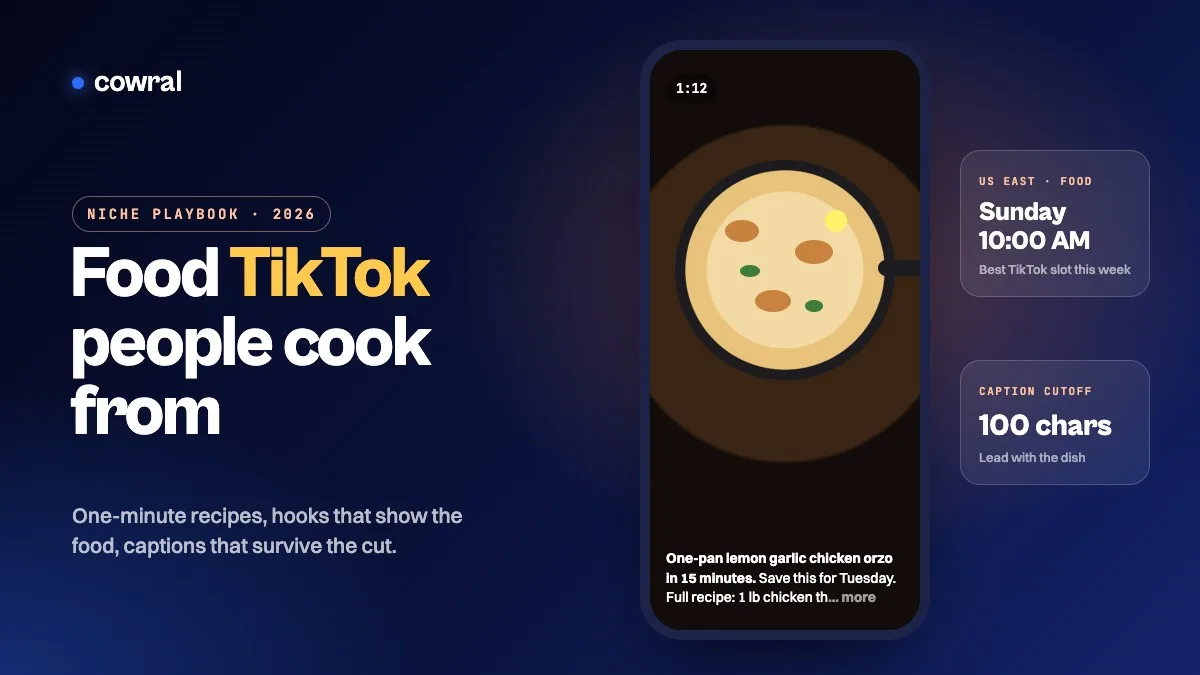 TikTokFood creators on TikTok in 2026: how to grow a recipe account people actually cook fromA 2026 playbook for food creators on TikTok, covering what the Creator Rewards Program pays for, hooks and captions that work for recipes,...
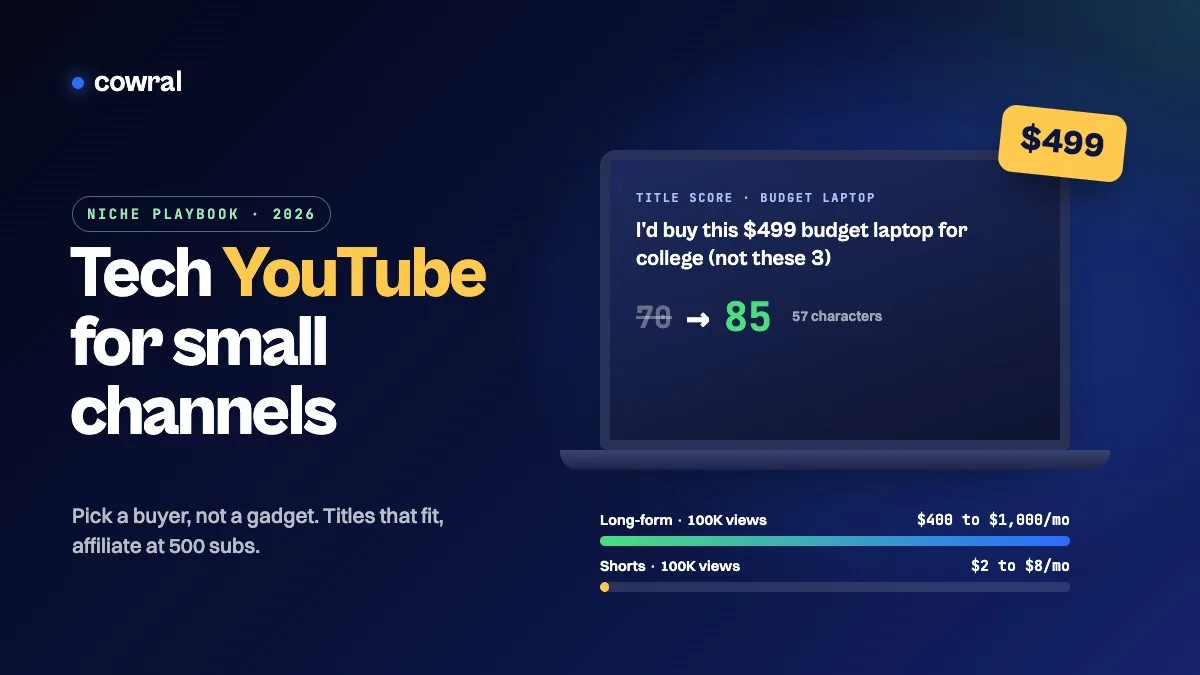 YouTubeTech YouTube in 2026: a channel strategy for small creators who review, explain and buildHow to grow a small tech YouTube channel in 2026, from picking a buyer instead of a gadget and writing titles that don't get cut off to the...
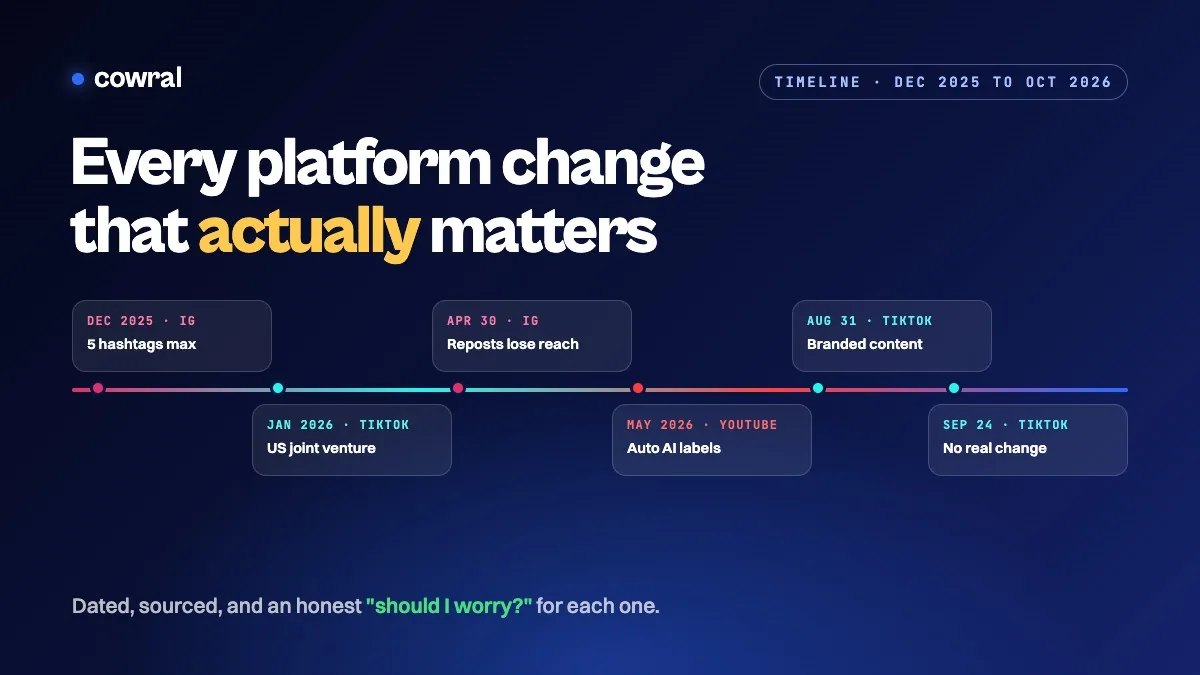 InstagramAlgorithm and policy changes creators need to know in 2026: a dated timelineEvery TikTok, Instagram and YouTube change that actually matters for creators in 2026, in date order, with sources, what each one means for...