10 free tools. Zero signups. Your files never leave your browser.Open the Viral Lab →
How to grow a small tech YouTube channel in 2026, from picking a buyer instead of a gadget and writing titles that don't get cut off to the 500-subscriber affiliate rule and the FTC rules for review units.
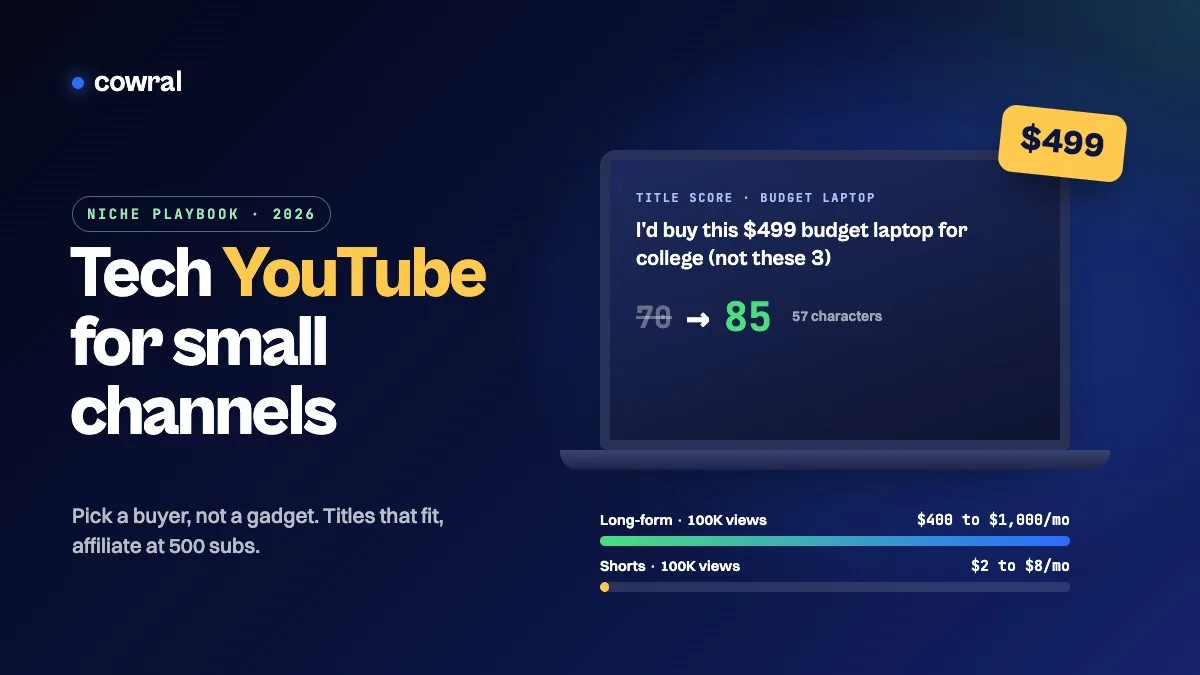
A new phone launches on a Tuesday. By Wednesday morning YouTube is full of reviews, and the top ones come from channels with millions of subscribers, early review units and studio lighting. Your review, filmed on day three with a phone you bought yourself, lands on page nine.
That’s the trap most small tech channels fall into: racing the big channels on the exact videos they’re best at. Tech is still one of the most rewarding niches on YouTube. You just win it a different way.
This is a playbook for American tech creators with under about 10,000 subscribers: reviewers, explainers, desk-setup builders and AI tool channels.
Key takeaways
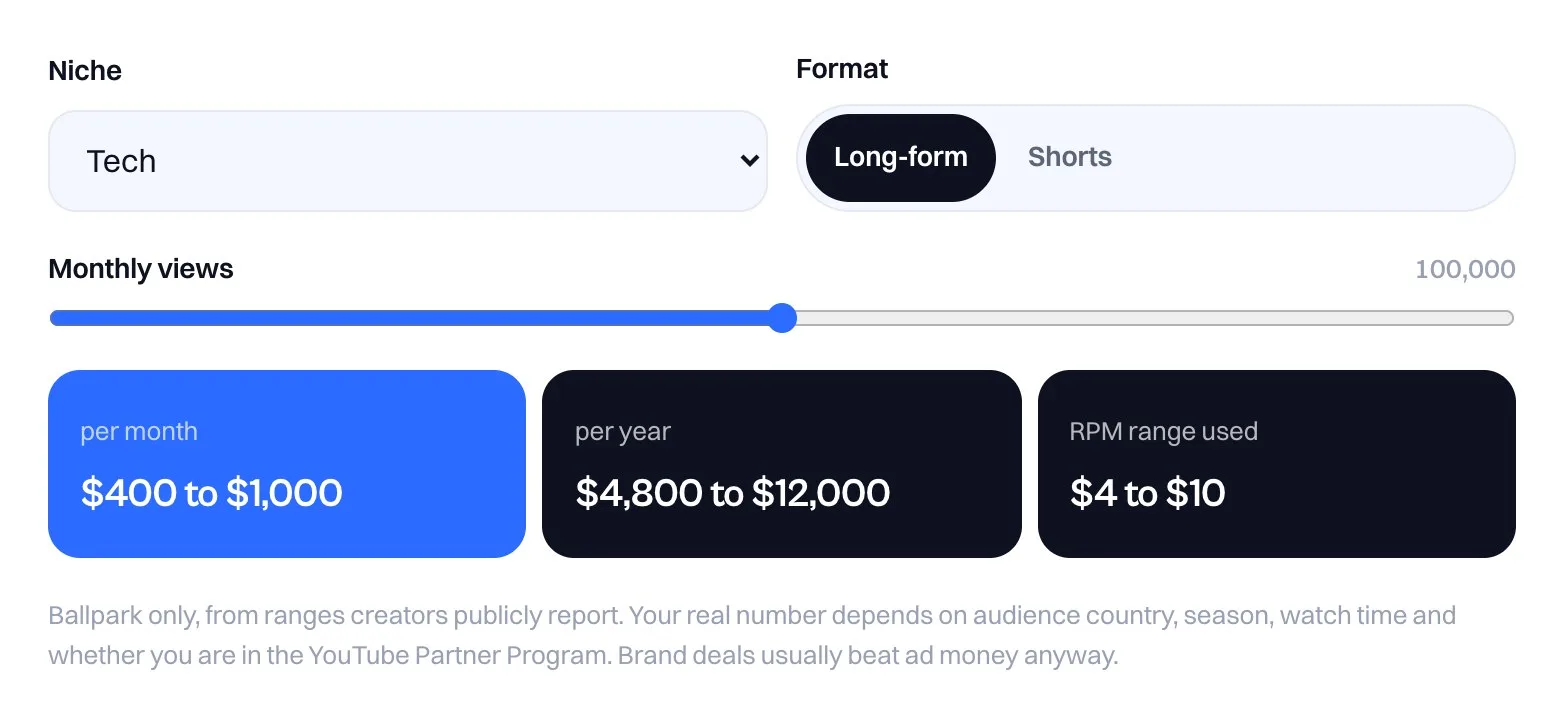
Of the eight niches in Cowral’s free Creator Money Calculator, tech has the second-highest long-form RPM range ($4 to $10 per 1,000 views), behind only finance ($8 to $20). We ran a tech channel at 100,000 monthly views through the calculator, first as long-form:
Then the same views as Shorts:
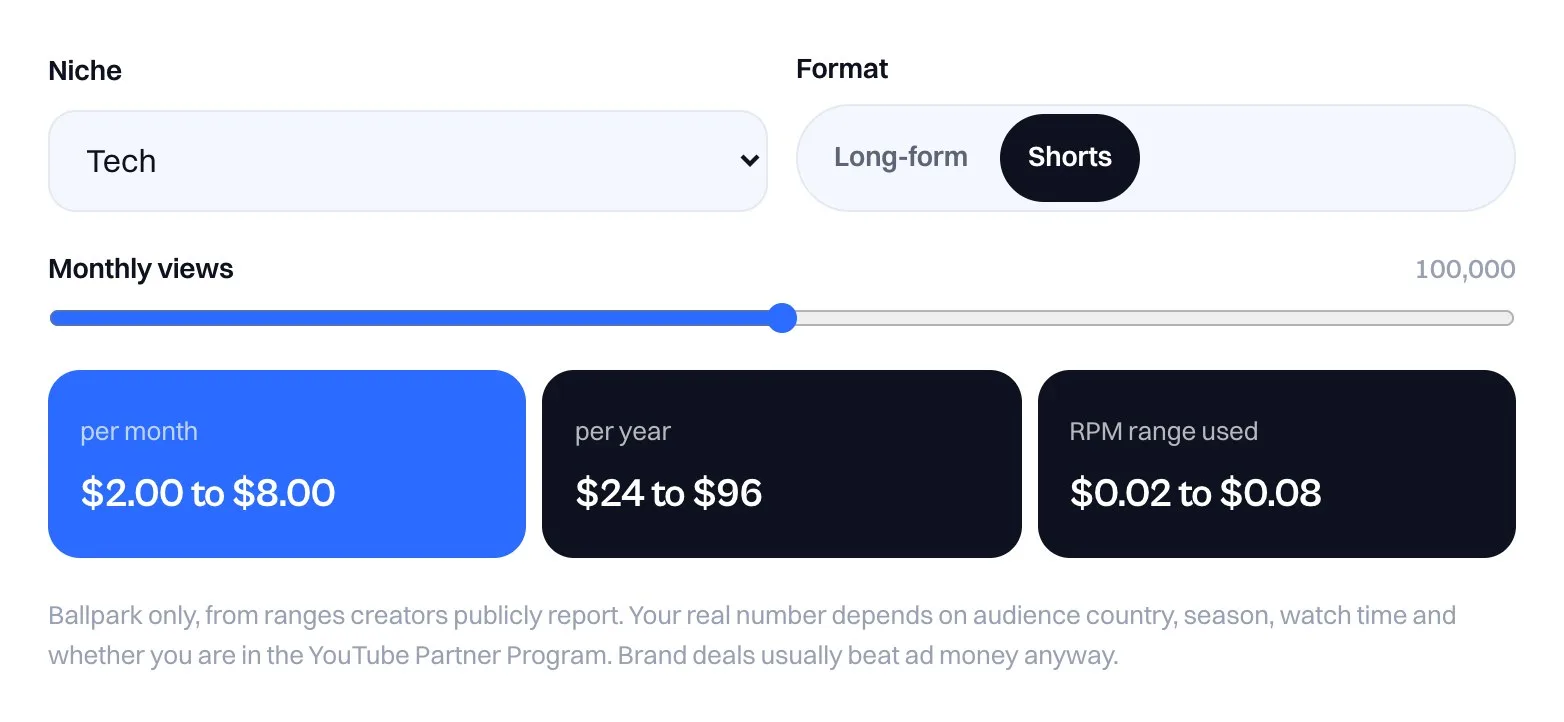
That’s roughly $400 to $1,000 a month from long-form against $2 to $8 from Shorts. These are ballpark ranges based on what creators publicly report, and your real number depends on where your viewers live, the time of year and how long they watch. But the gap tells you where to put your effort: tech long-form is the product, and Shorts are the advertising for it.
None of this kicks in until you’re in the YouTube Partner Program. For ad revenue, that means 1,000 subscribers plus either 4,000 qualified watch hours in the last 12 months or 10 million qualified Shorts views in the last 90 days. Watch time from the Shorts feed doesn’t count toward the 4,000 hours.
Big channels review products. Small channels grow faster by helping a specific person make a decision. Compare:
The second version of each has less competition, a clearer viewer and a reason to exist months after launch week. It also builds a library: once you’re “the channel for budget student tech,” every back-to-school season sends people back to your old videos.
Review late, on purpose
You don’t need launch-day access. “After three months” and “is it still worth it in 2026” videos answer a question launch reviews can’t, and nobody with early access can make them on day one.
Tech titles tend to fail in one of two ways: too generic (“Best Budget Laptop 2026 Review”) or too long, with the useful part cut off in search. We tested both in Cowral’s free YouTube Title Analyzer with “budget laptop” as the keyword. The plain version first:
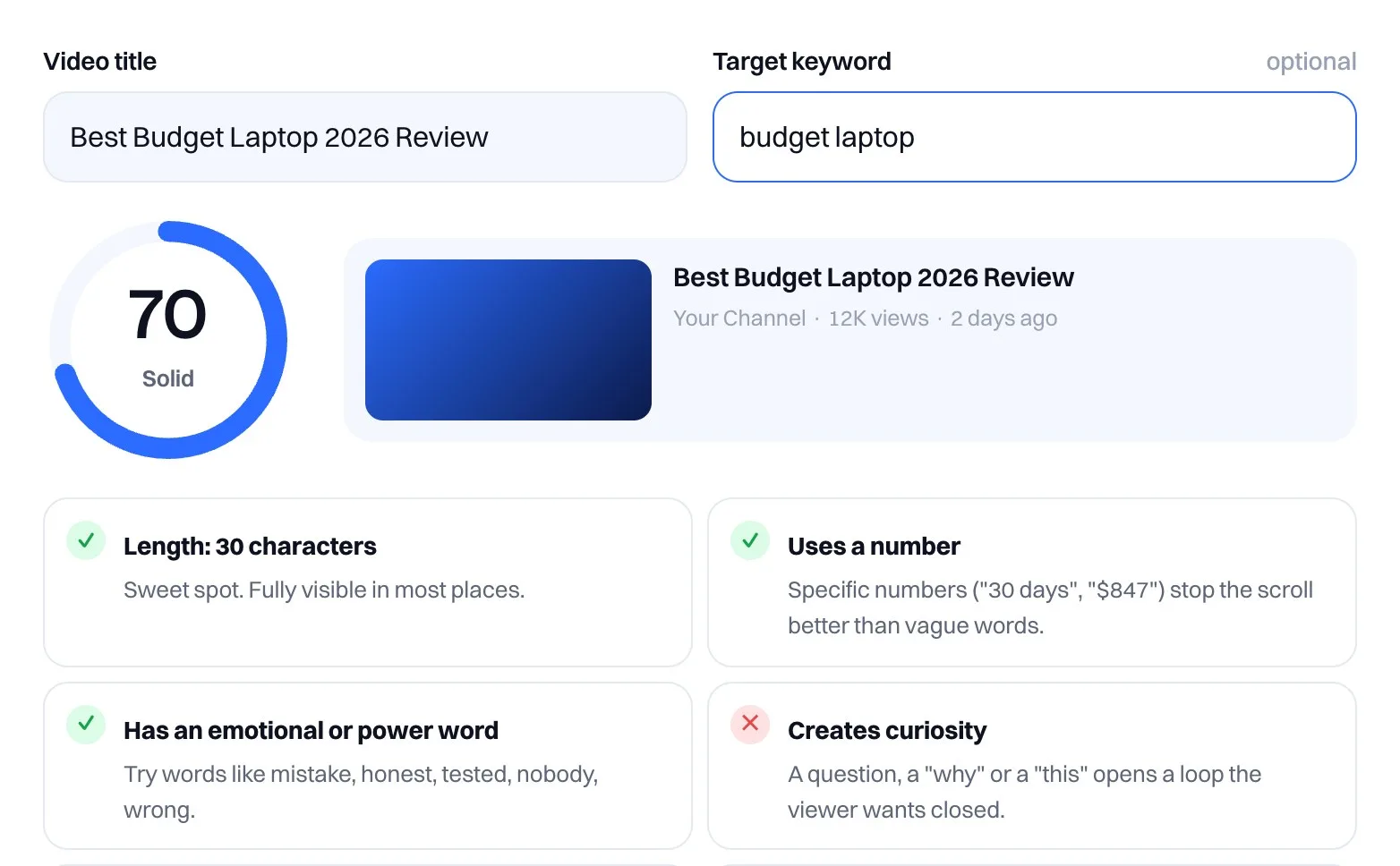
It scores 70. It’s short, has a number and uses a strong word, but nothing about it is personal or makes you curious.
Our first rewrite, “Budget laptop for college: I would buy this $499 one (and skip these 3),” scored lower, at 63. It was more specific, but at 71 characters it’s likely to be cut off in search, and the strong word was gone. Trimming it to 57 characters fixed that:
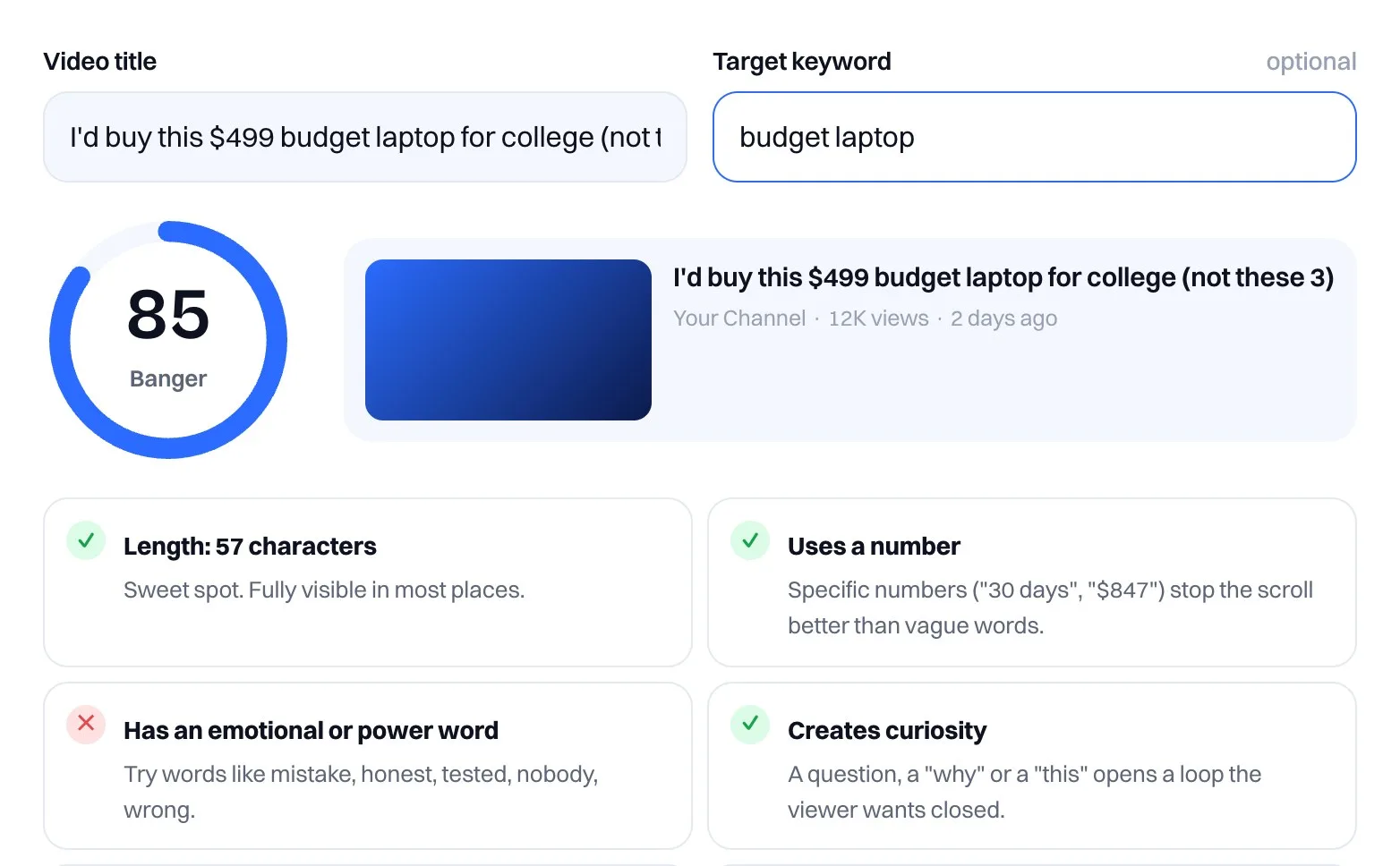
That version scores 85. Same idea, a clear price, a reason to click and a keyword near the front, all inside the length people actually see.
A higher score is not a promise
The analyzer checks things that tend to help, like length, numbers and keyword position. It can’t predict views. Use it to catch weak titles before you publish, then compare titles in YouTube Studio’s Test & Compare once your video is live.
Since tech Shorts earn so little directly, every Short should send people somewhere. Cut the single most useful moment from a long video, like a price, a comparison or a “don’t buy this if,” and link the Short to the full video with YouTube’s Related video feature in YouTube Studio.
For timing, here’s Cowral’s Best Time to Post for Tech & AI on YouTube Shorts with a US East Coast audience:
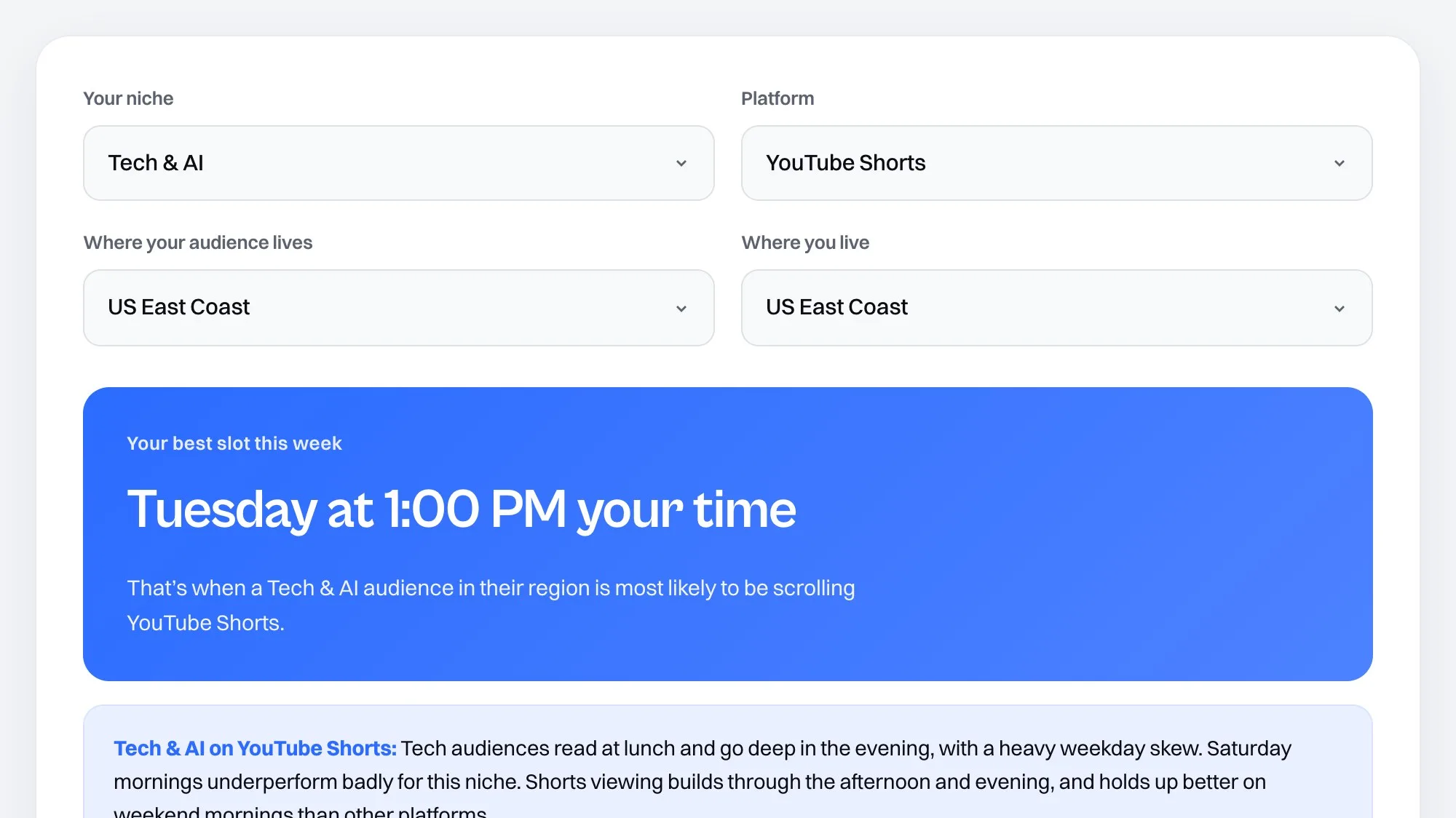
Cowral’s notes for this niche explain the pick: tech audiences skew heavily toward weekdays, watch at lunch and go deeper in the evening, and Saturday mornings tend to underperform. Start there, then switch to your own “When your viewers are on YouTube” data in YouTube Studio once you have a few weeks of uploads.
For most small tech channels, affiliate income arrives long before ad revenue matters. YouTube lowered the bar for its own program in 2026.
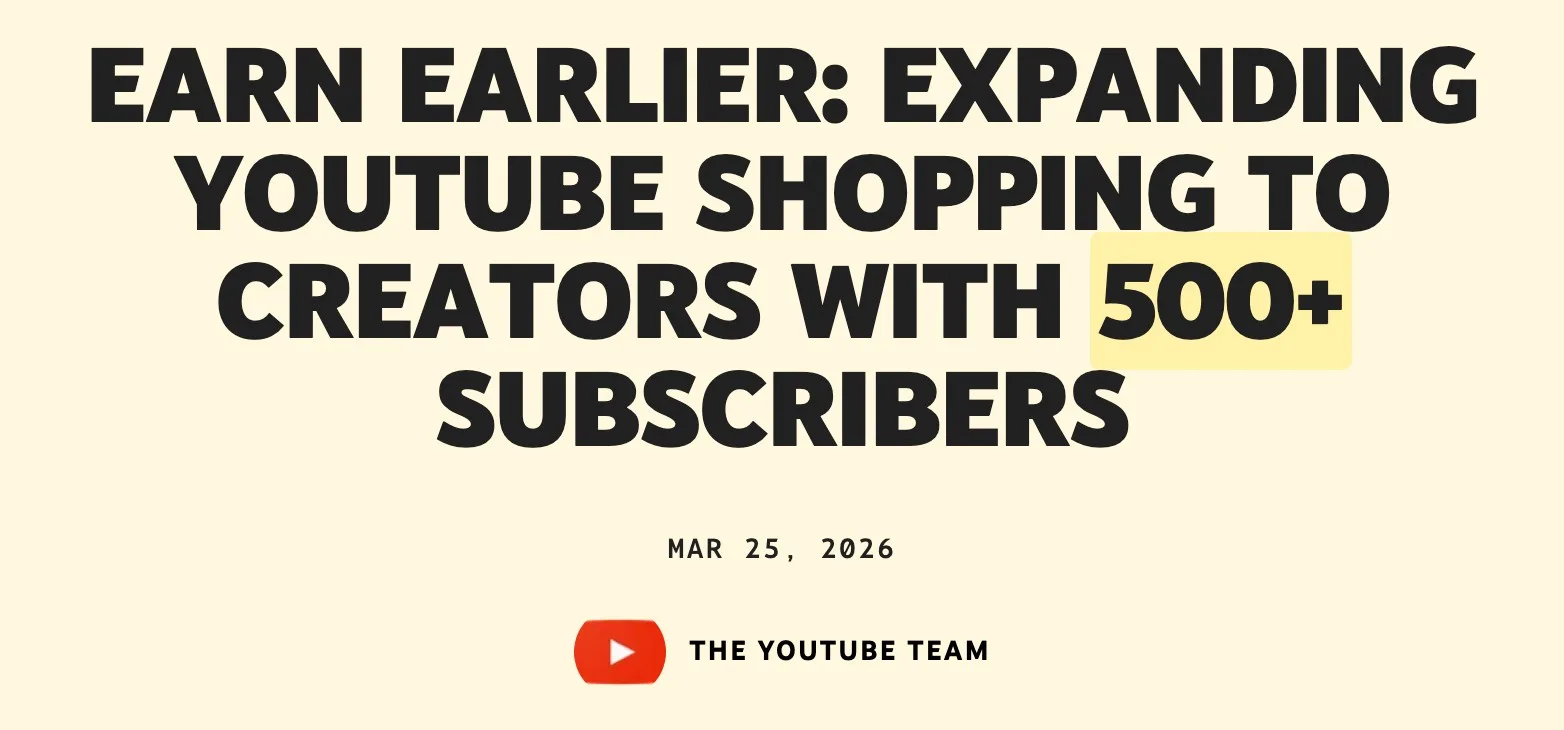
YouTube Shopping’s affiliate program now starts at 500 subscribers. On March 25, 2026, YouTube opened it to all creators in the YouTube Partner Program with at least 500 subscribers who meet its other guidelines. The US is one of the eligible countries. Channels set to Made for Kids and music channels can’t join. Eligible creators see the option in YouTube Studio.
You can tag Amazon products. Creators enrolled in the affiliate program in the US, Brazil or India can tag Amazon products in their videos, with earnings paid through AdSense alongside other YouTube Shopping commissions.
More tagging is coming. At Made on YouTube on September 23, 2026, YouTube said it will use AI to auto-tag products in videos and is expanding its Amazon affiliate program beyond the US. It didn’t give a date for either.
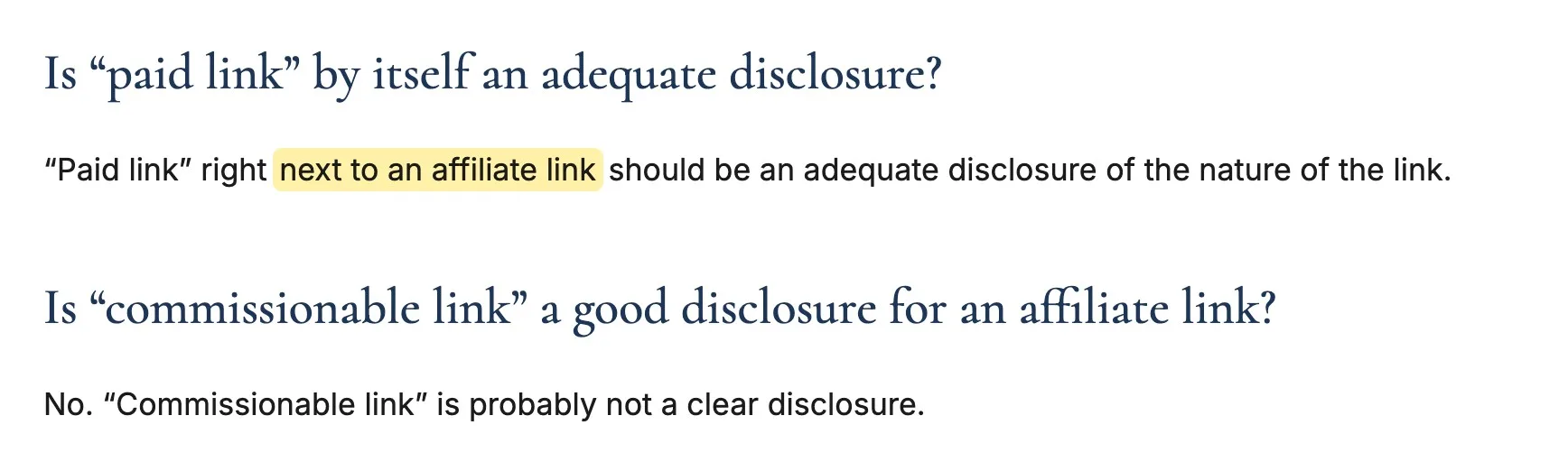
"Affiliate link" alone may not be enough
The FTC says viewers might not understand that “affiliate link” means you get paid. It suggests that “paid link” next to the link is clearer, and that YouTube creators disclose affiliate relationships both in the video and in the description near the links.
Tech creators get more free stuff than almost any other niche. The FTC’s rules are clear about it.
A free product is a material connection. The FTC’s Endorsement Guides FAQ says it doesn’t matter whether a brand sends the product, gives you a code or reimburses you. If you got it free or were paid, you need to disclose it.
Disclose in the video itself. The same FAQ says a disclosure only in the description isn’t enough on its own, because viewers can easily miss it. Say it out loud near the start, and add it on screen. YouTube’s “includes paid promotion” checkbox helps, but the FTC says a platform’s built-in tool isn’t a guarantee you’re covered.
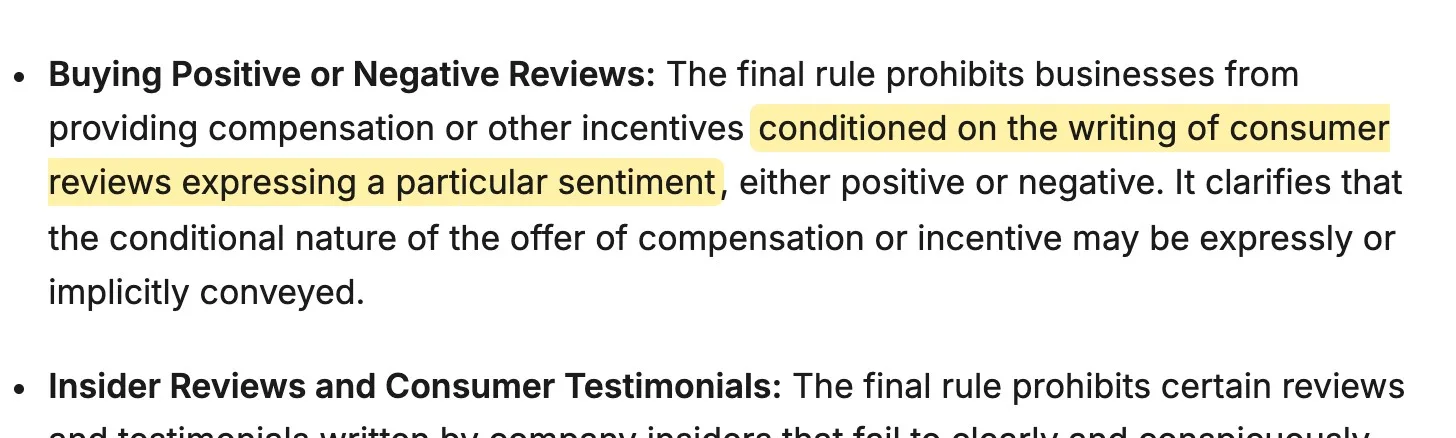
Brands can’t pay for a specific opinion. The FTC’s rule on consumer reviews and testimonials, in effect since October 21, 2024, bars businesses from offering compensation or other incentives on the condition that a review is positive or negative. The same rule bans buying fake followers or views when the buyer knew or should have known they were fake and uses them for a commercial purpose.
A deal you can turn down
If a brand offers a free laptop “for a positive review,” that condition is the problem. A normal review deal gives you the product and lets you say what you think. Ask for the terms in writing, and walk away from any deal that tells you what to conclude.
If you can’t afford to buy products, don’t try to keep up with review channels. Software tutorials, AI tool walkthroughs and “how this works” explainers need no hardware budget and age well.
And if your audience is outside the US, the money estimates and some programs above won’t match. YouTube Shopping eligibility and Amazon tagging both depend on your country.
Set your niche to tech and Cowral shows what’s rising in phones, laptops and AI tools this week, writes titles and hooks for long videos and Shorts, and suggests when to post for a US audience. You still test the products and give the verdict. Cowral helps you package it so the right buyer finds it.
You can start free, no card needed.
It can be. Of the eight niches in Cowral’s calculator, tech has the second-highest long-form RPM range, behind finance. The calculator estimates $400 to $1,000 a month at 100,000 monthly long-form views, as a ballpark. Affiliate income often matters more for small channels.
Since March 25, 2026, YouTube Shopping’s affiliate program is open to creators in the YouTube Partner Program with at least 500 subscribers, in eligible countries including the US. Check the Earn section of YouTube Studio to see if your channel qualifies.
Yes. The FTC treats free products as a material connection. Disclose it clearly in the video, not only in the description, and tick YouTube’s paid promotion box.
No. Under the FTC rule on consumer reviews and testimonials, in effect since October 21, 2024, businesses can’t offer compensation or incentives conditioned on a review expressing a particular sentiment.
Yes, as a way to be found. At 100,000 monthly views, Cowral’s calculator estimates tech Shorts earn about $2 to $8 a month, so link each Short to a long video that can earn and convert.
Something that tells people who it’s for, like a budget, a profession or a use case, rather than a generic “Tech” name. It makes your channel easier to remember and easier to recommend.

Olu Sam is an SEO expert and social media content creator who built over 50K followers across his social media pages in less than a year of creating content.
LinkedIn ProfileHow we research and fact-check TikTokFood creators on TikTok in 2026: how to grow a recipe account people actually cook fromA 2026 playbook for food creators on TikTok, covering what the Creator Rewards Program pays for, hooks and captions that work for recipes,...
 InstagramAlgorithm and policy changes creators need to know in 2026: a dated timelineEvery TikTok, Instagram and YouTube change that actually matters for creators in 2026, in date order, with sources, what each one means for...
 YouTubeLifestyle YouTube in 2026: what's working now for small vlog channelsHow to grow a lifestyle or vlog channel on YouTube in 2026, from building for TV viewers and writing titles people can picture to Shorts...