10 free tools. Zero signups. Your files never leave your browser.Open the Viral Lab →
How to grow a lifestyle or vlog channel on YouTube in 2026, from building for TV viewers and writing titles people can picture to Shorts that act as trailers and the AI and sponsorship rules to know.
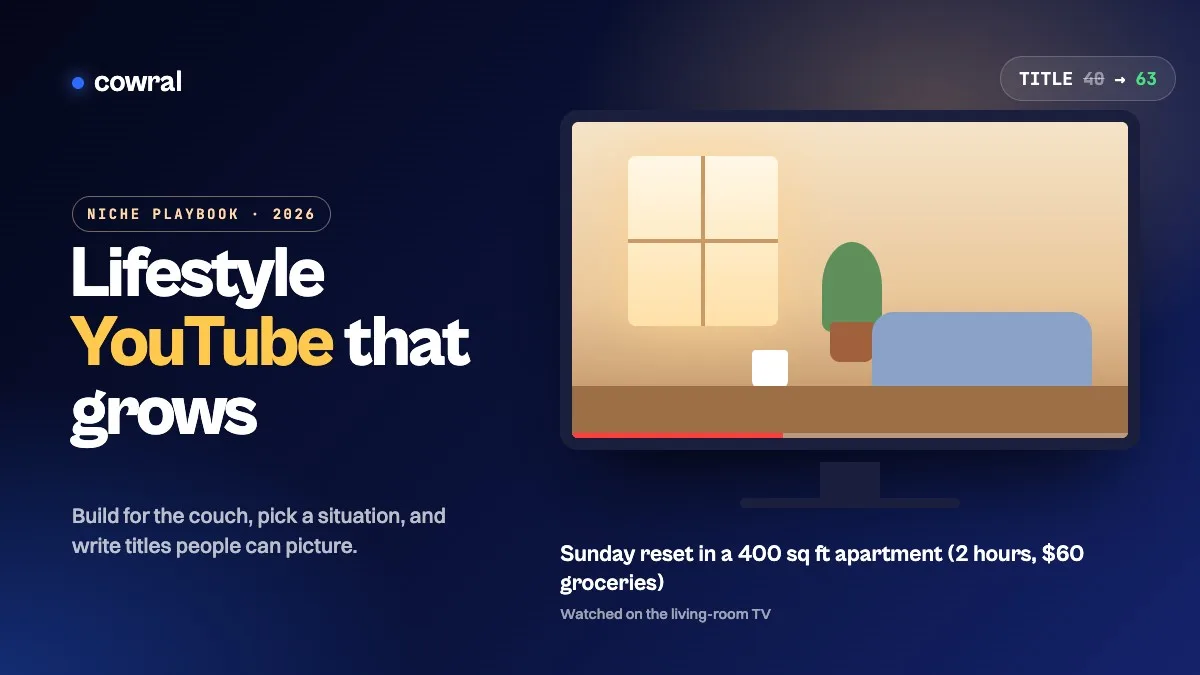
You spend Saturday filming a slow morning: coffee, the farmers market, a little cleaning, golden light through the blinds. You edit it on Sunday night, call it “My Sunday Vlog,” and it sits at 140 views for a week. Meanwhile someone films an almost identical day and pulls 90,000.
Most of the time the difference isn’t the camera, the face or luck. It’s that the second video had a premise you could explain in one sentence, and a title that told a stranger exactly what they’d get.
Lifestyle is one of the hardest niches to grow from zero because it looks easy and everyone’s doing it. This is a playbook for American lifestyle and vlog creators under about 10,000 subscribers, built around how people actually watch this kind of video in 2026.
Key takeaways
Nielsen’s monthly Gauge puts YouTube at 14.2% of all US TV viewing in July 2026, a record, up from 12.7% in January. That’s viewing on actual TV sets, not phones.
You don’t need to treat that as a rule for every video, but it changes a few things for lifestyle in particular:
Phones still matter, especially for Shorts and for discovery. The point is that the long video is often the thing people sit down with.
The big lifestyle channels are often personality-led: people watch because they like that specific person. That’s hard to copy and slow to build. Small channels grow faster with a situation that strangers recognize as their own:
Each one has a built-in audience, a natural series and a reason to come back next week. Your personality still comes through, it just isn’t the only thing doing the work.
If you’re naming a new channel, it helps to see a few options side by side. Here’s Cowral’s free Channel Name Generator for a slow-living channel, with a first name added:
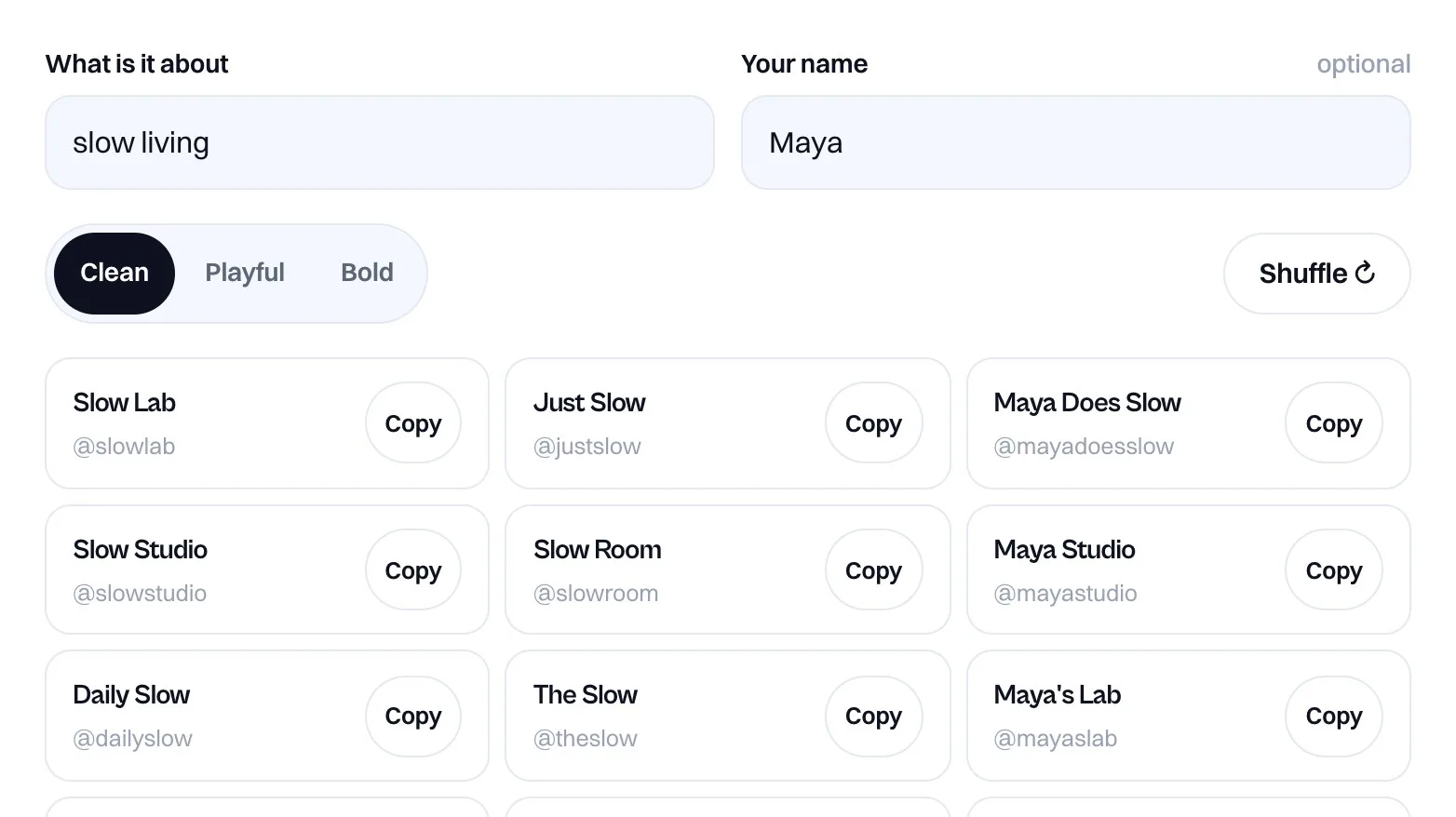
Some will be taken, and some are too generic to rank. Treat the list as a starting point, then check the handle is free on YouTube, Instagram and TikTok before you commit.
Lifestyle titles tend to be the vaguest on YouTube: “cozy vlog,” “a week in my life,” “reset with me.” They describe a mood, not a video. Search and the home feed both do better when the title gives a specific promise.
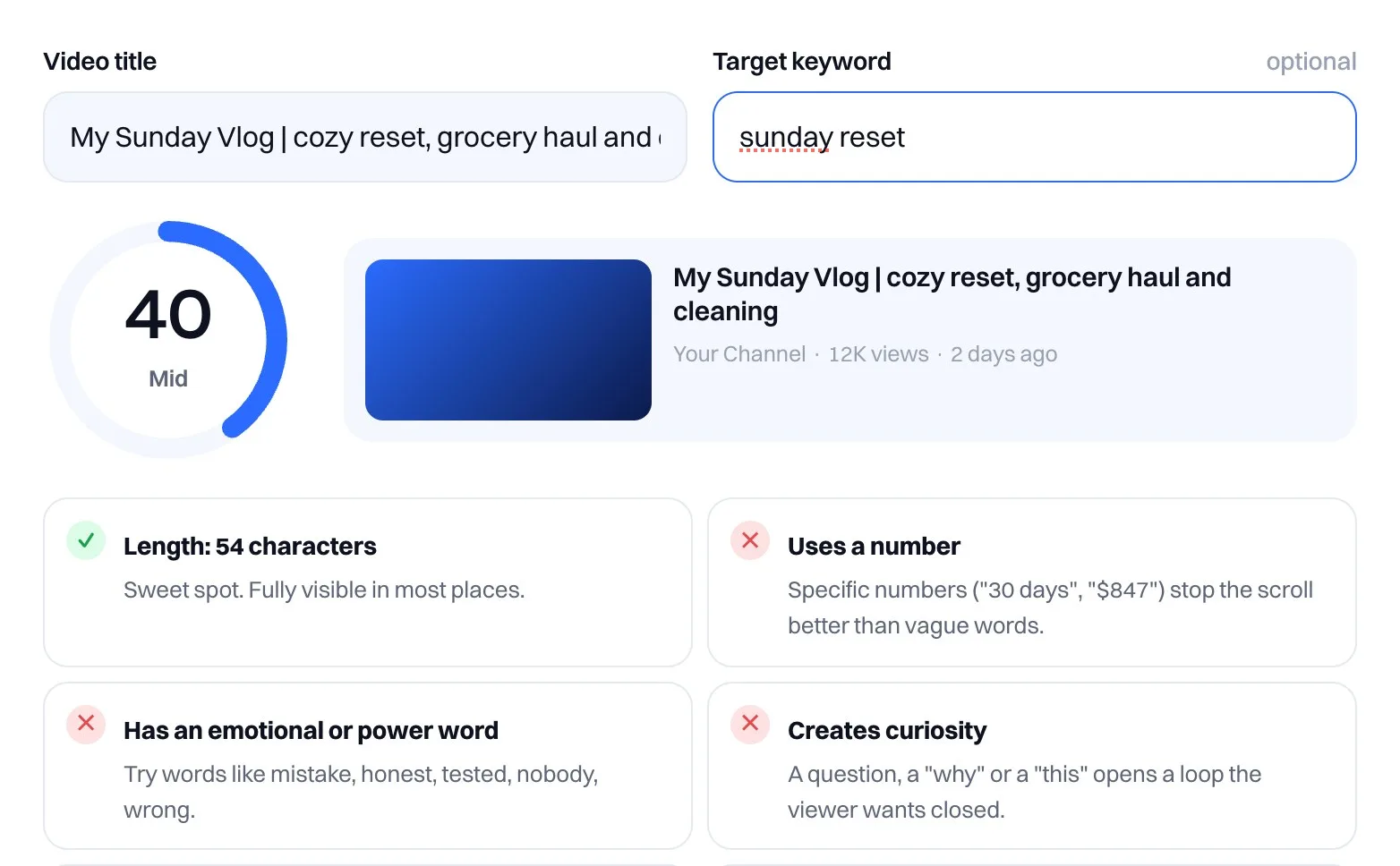
We ran a typical title through Cowral’s free YouTube Title Analyzer with “sunday reset” as the keyword:
Then a rewrite with the same video in mind, just more concrete:
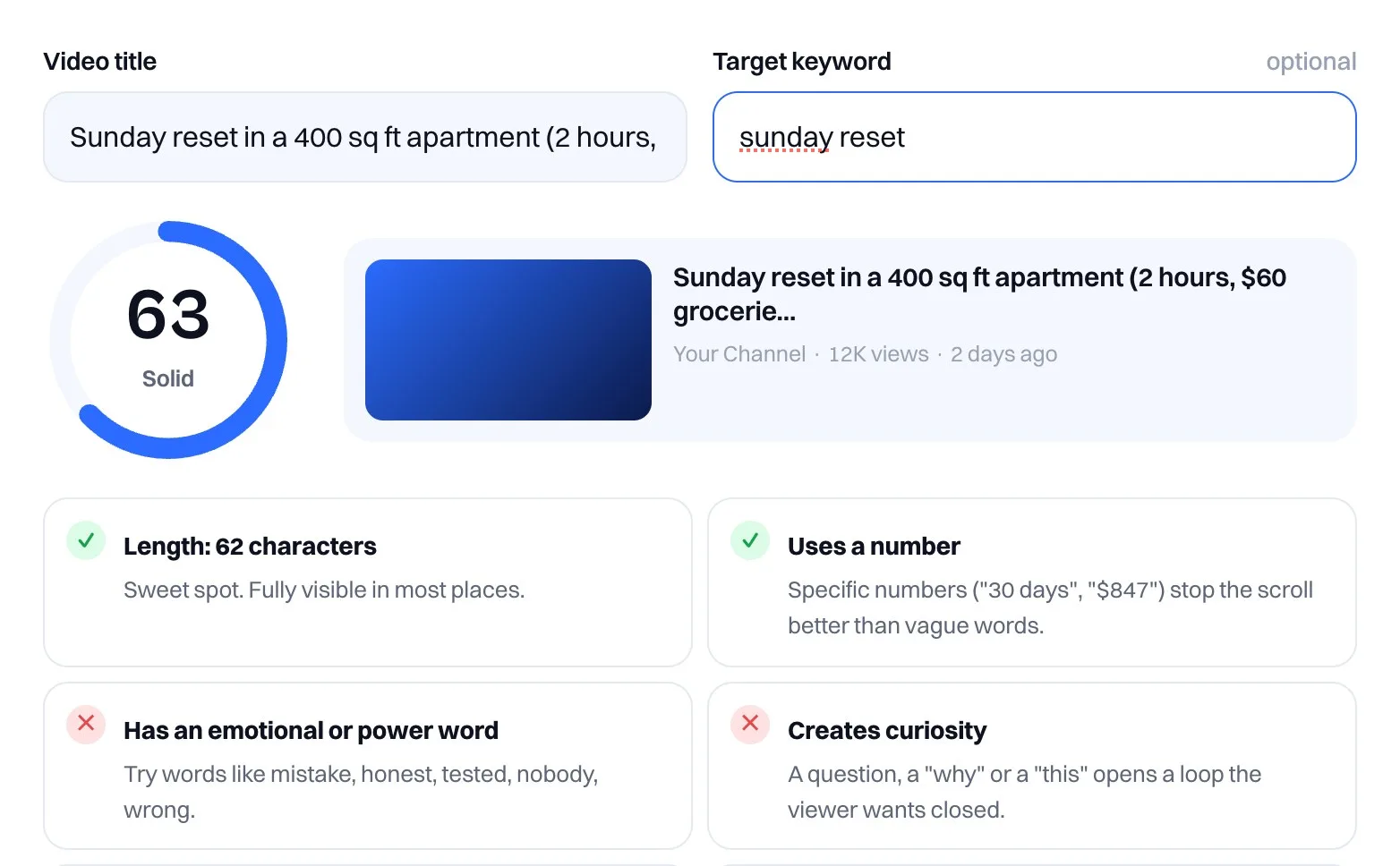
The score went from 40 to 63. The rewrite names the space (400 sq ft), the time (2 hours) and a number people care about ($60 groceries). It still fails the “creates curiosity” check, and for a cozy channel that’s fine. Not every lifestyle title needs a cliffhanger. Specific beats clever.
The score is a checklist, not a forecast
A higher score means the title ticks more of the boxes that tend to help: length, a number, the keyword up front. It can’t predict views. Use it to catch vague titles before you publish, then let your own analytics decide.
If you have access to YouTube’s Test & Compare in YouTube Studio, use it. It lets you test up to three titles or thumbnails on the same video and picks a winner based on share of watch time, not clicks. Title testing has been rolling out gradually since late 2025, so you may only see thumbnail testing for now. Results can take from a few days to two weeks.
Spend an hour in the lifestyle corner of YouTube and a few formats keep coming back:
Make it a series from day one
“Sunday reset, week 4” gives people a reason to watch week 5. A recurring title and a recognizable thumbnail layout also help YouTube connect your videos for the same viewers.
Shorts are great at reaching people who’ve never heard of you, and weak at turning them into long-form viewers unless you make the path obvious. Cut 20 to 40 seconds from your long video, the satisfying before-and-after or the one budget number, and point back to it.
YouTube’s Related video link puts a tappable link on the Short. You set it in YouTube Studio on desktop, in the Short’s details. If you schedule Shorts with another tool, add the link in Studio afterward.
For timing, here’s Cowral’s Best Time to Post for Lifestyle & Vlogs on YouTube Shorts with a US East Coast audience:
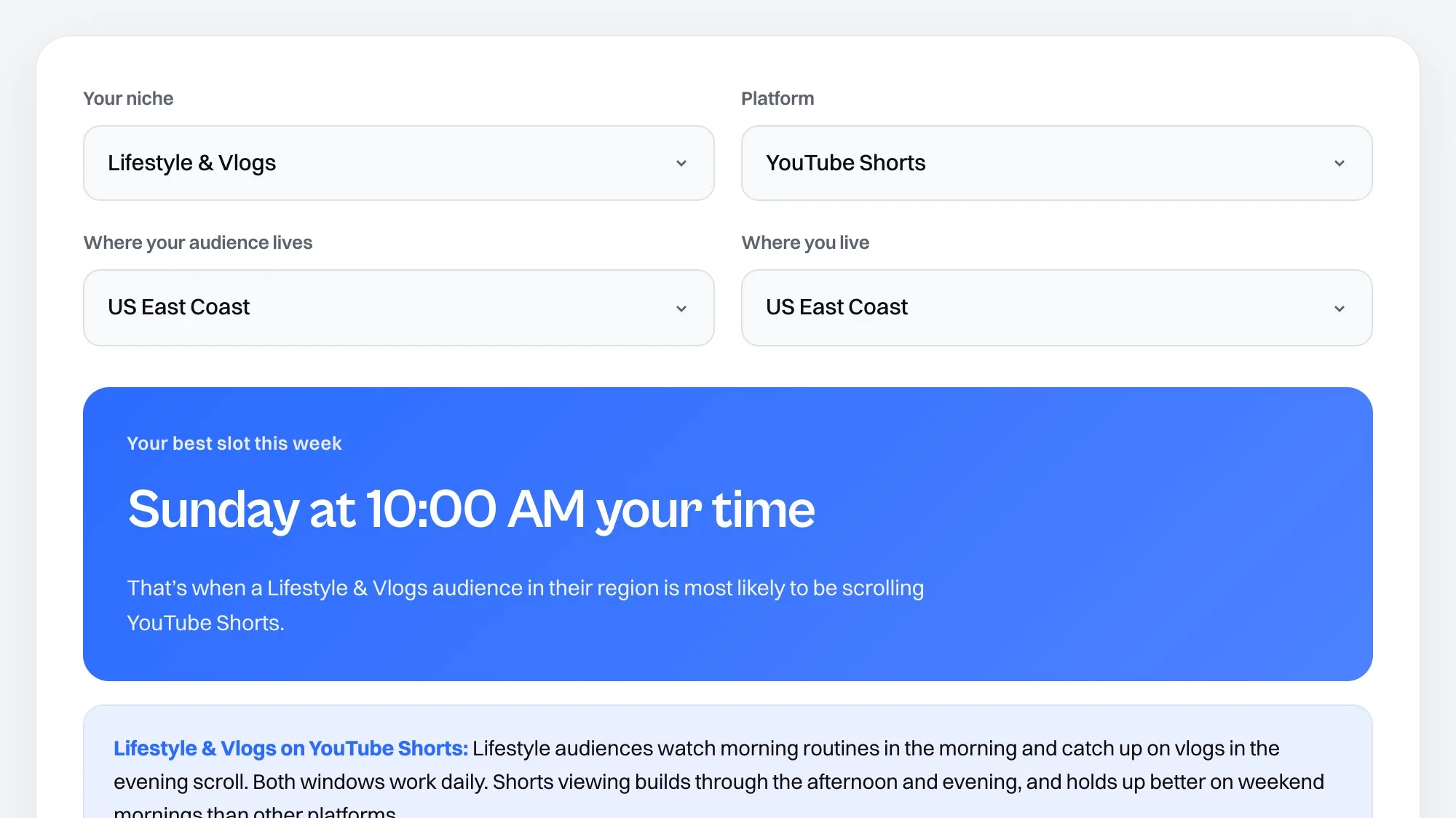
Sunday morning makes sense for this niche: people are home, slow and in the mood for routines. Treat it as a first guess, then check when your own viewers are on YouTube in Studio’s Audience tab once you have a few weeks of data.
Realistic AI footage gets labeled. Since late May 2026, YouTube automatically adds an AI label to photorealistic AI content that creators didn’t disclose. YouTube has said the label doesn’t affect recommendations or monetization, but a surprise label on a “real life” channel can cost you trust. If you use AI b-roll or an AI voice, disclose it yourself when you upload.
Mass-produced videos can’t earn. YouTube’s Partner Program rules call out “inauthentic” content, meaning repetitive or mass-produced videos, and the wording was tightened on July 15, 2025. A real person filming their real Sunday is nowhere near this line. A channel of AI slideshows of “cozy cabins” with a stock voiceover is much closer.

Sponsored and gifted videos need disclosure. The FTC expects a clear disclosure whenever you have a material connection to a brand, including free products. On YouTube, tick the “includes paid promotion” box and say it in the video itself, not just in the description. Amazon storefront and affiliate links count too.
Gifted products count
Lifestyle creators get a lot of free stuff: candles, organizers, skincare. The FTC treats a free product as a material connection, so a gifted haul still needs a disclosure, even if nobody paid you cash.
If you already have a loyal audience that watches because of you, your vague titles might be working fine, and a sudden switch to “400 sq ft, $60” titles could feel off-brand. Test one change at a time.
And if you only want to make short-form, YouTube might not be the best home for lifestyle content at all. Instagram Reels is often a better fit for quick routines. Our Reels vs Shorts comparison goes through that choice.
At Made on YouTube on September 23, 2026, YouTube announced Ask Studio features that give feedback on drafts, and A/B testing for Shorts (up to three different cuts) planned for 2027. If those land as described, small lifestyle channels will be able to test edits, not just titles. Until then, the basics above do most of the work.
Set your niche to lifestyle and Cowral shows what’s trending in routines, homes and budget living this week, writes titles and hooks for your long videos and Shorts, and suggests when to post for a US audience. You still film your life. Cowral helps you package it.
You can start free, no card needed.
It’s crowded at the broad level (“my life,” “cozy vlogs”). It’s much less crowded once you pick a specific situation, like a tiny apartment, a night-shift schedule or a tight budget, and build a series around it.
Long enough to show the whole routine without filler. Many lifestyle videos land between 12 and 30 minutes, partly because a lot of viewers watch on TVs. Your audience retention graph will tell you where people leave.
Pick one repeatable format, post it on the same day each week, write specific titles, and cut two or three Shorts from each long video that link back to it. Consistency with one format usually beats variety early on.
For a US East Coast lifestyle audience on Shorts, Cowral’s Best Time to Post suggests Sunday at 10:00 AM. After a few weeks, check the “When your viewers are on YouTube” card in YouTube Studio and adjust.
Yes. The FTC treats free products as a material connection. Tick YouTube’s paid promotion box and mention it clearly in the video.
You can, but disclose realistic AI footage or voices when you upload. YouTube now labels undisclosed photorealistic AI automatically, and on a channel built on real life, that label can hurt trust more than the disclosure would.

Olu Sam is an SEO expert and social media content creator who built over 50K followers across his social media pages in less than a year of creating content.
LinkedIn ProfileHow we research and fact-check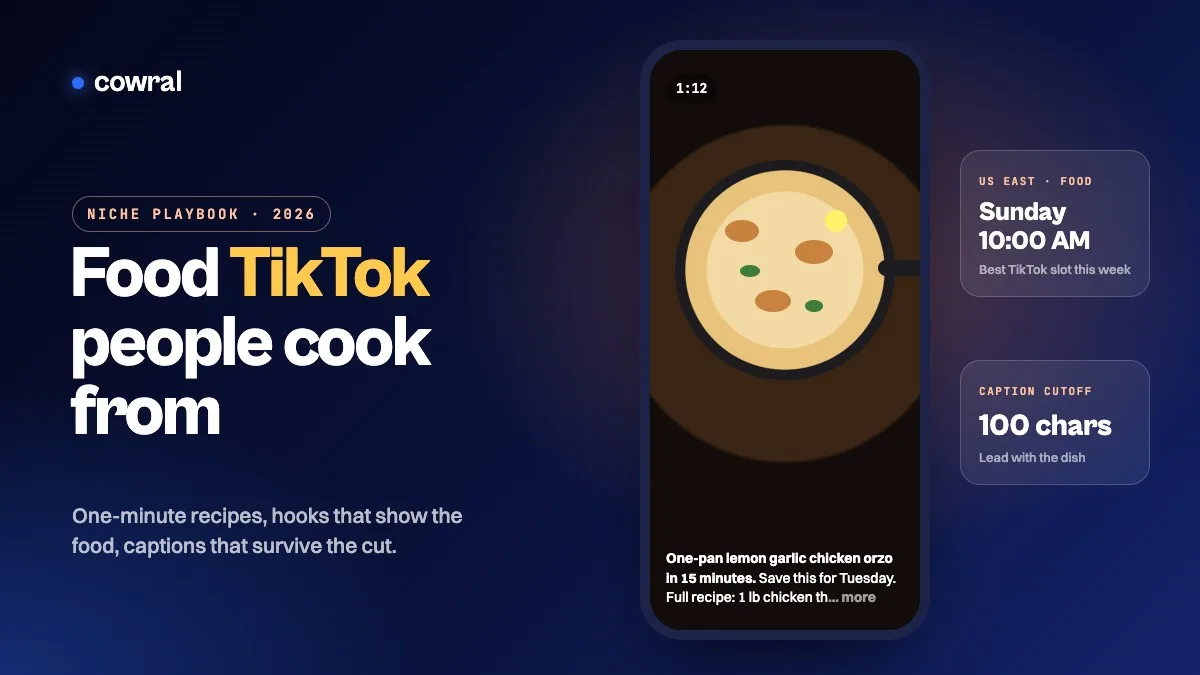 TikTokFood creators on TikTok in 2026: how to grow a recipe account people actually cook fromA 2026 playbook for food creators on TikTok, covering what the Creator Rewards Program pays for, hooks and captions that work for recipes,...
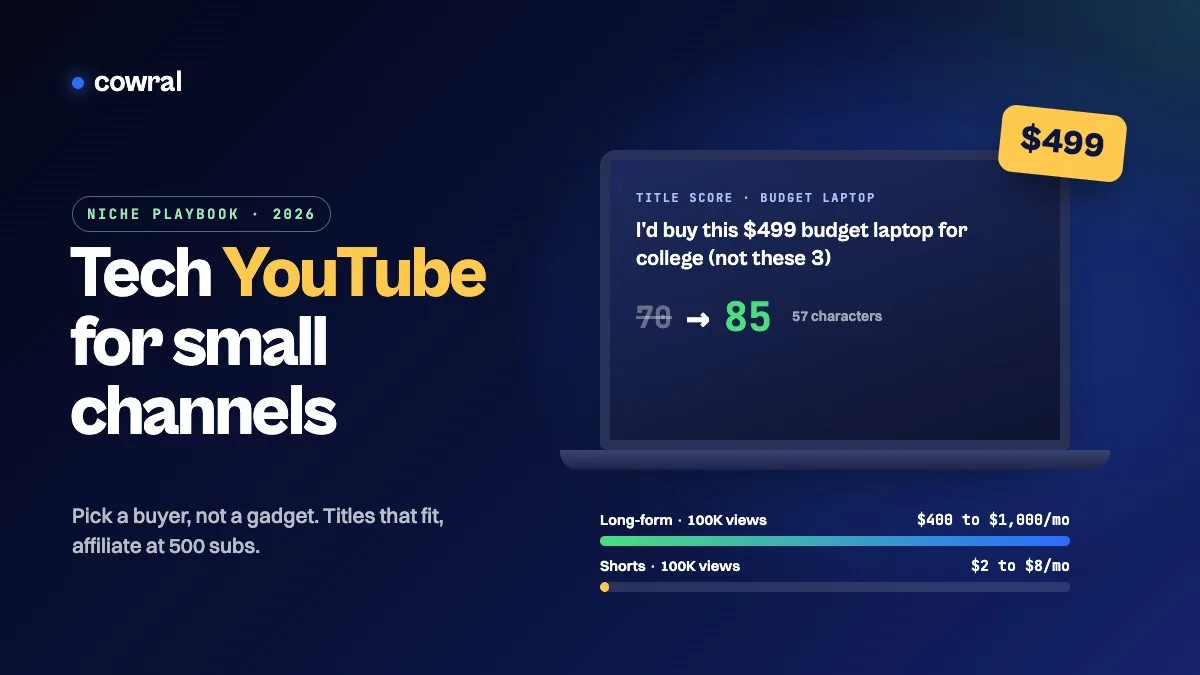 YouTubeTech YouTube in 2026: a channel strategy for small creators who review, explain and buildHow to grow a small tech YouTube channel in 2026, from picking a buyer instead of a gadget and writing titles that don't get cut off to the...
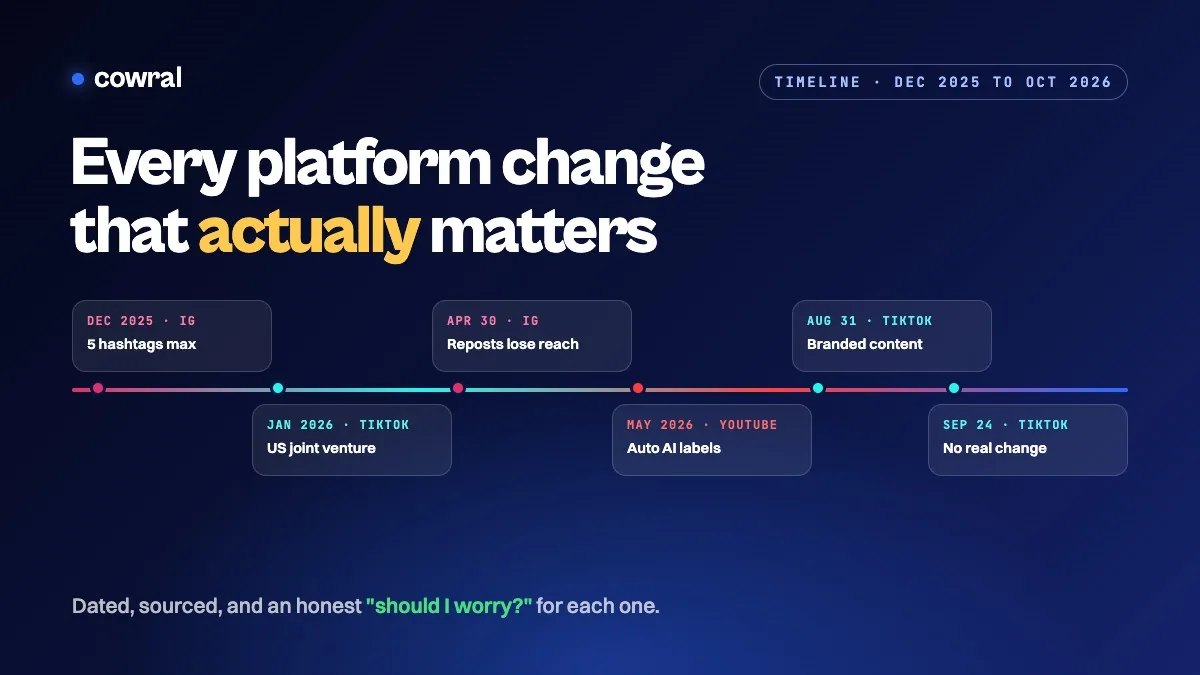 InstagramAlgorithm and policy changes creators need to know in 2026: a dated timelineEvery TikTok, Instagram and YouTube change that actually matters for creators in 2026, in date order, with sources, what each one means for...