10 free tools. Zero signups. Your files never leave your browser.Open the Viral Lab →
Reels or Shorts? A plain comparison of reach, money, length and effort in 2026, and a simple way to pick one if you only have time for one platform.
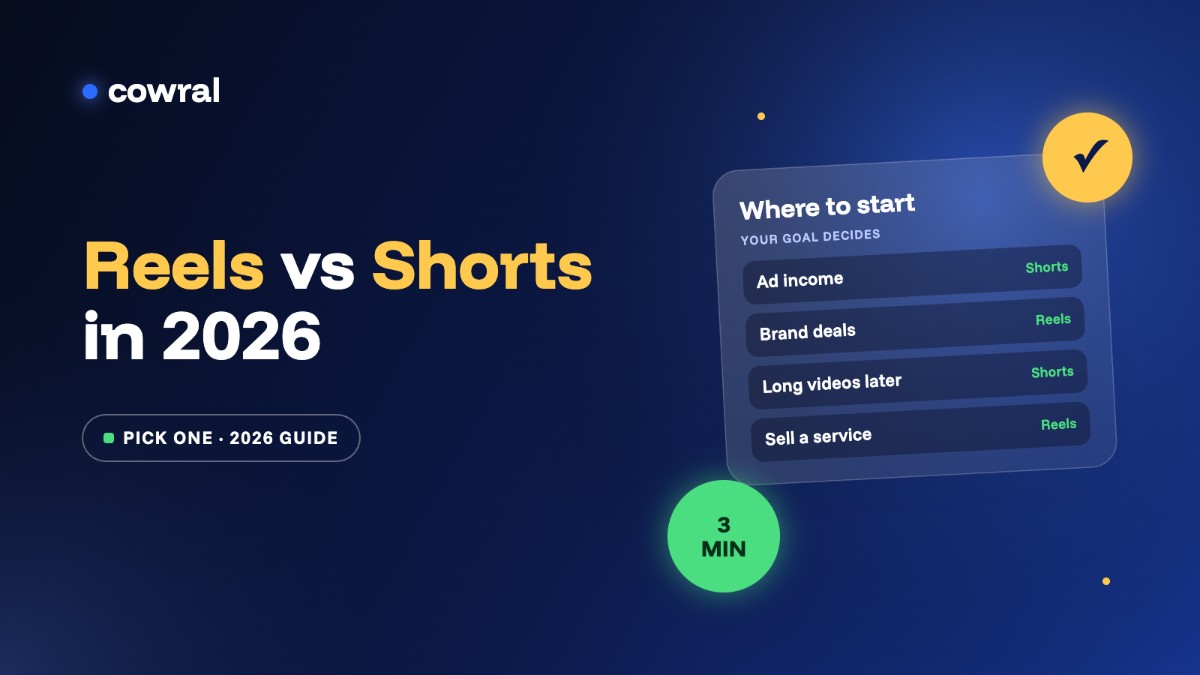
Most “Reels vs Shorts” articles end the same way: use both. And sure, in a perfect world you would. But if you’ve got a day job, a phone that’s always low on storage and maybe four hours a week for content, “do everything” isn’t advice. It’s a recipe for burning out by week three.
So this guide assumes you can only pick one for now. We’ll compare Instagram Reels and YouTube Shorts on the things that actually matter when you’re starting out: who sees your videos, how the money works, how much effort each one takes, and what kind of creator each one suits. Then you’ll get a simple 30-day test to confirm your pick, and a cheap way to add the second platform later without doubling your workload.
Key takeaways
If you want the short version before the details, here it is:
Now let’s look at why.
| Instagram Reels | YouTube Shorts | |
|---|---|---|
| Max length | Up to 3 minutes (since January 2025) | Up to 3 minutes (since October 2024) |
| Who sees a new creator | Non-followers through the Reels tab and Explore; Trial Reels test with non-followers first | Anyone in the Shorts feed, plus YouTube search over time |
| Direct ad income | No broad ad revenue share for Reels | Yes, through the YouTube Partner Program |
| Main way creators earn | Brand deals, affiliate links, selling your own products | Shorts ad revenue share, then long videos, brand deals |
| How long a video keeps working | Mostly the first few days | Can keep picking up views for months, especially from search |
| Best for | Personal brands, local businesses, beauty, fashion, food, coaching | Education, tech, gaming, commentary, anything searchable |
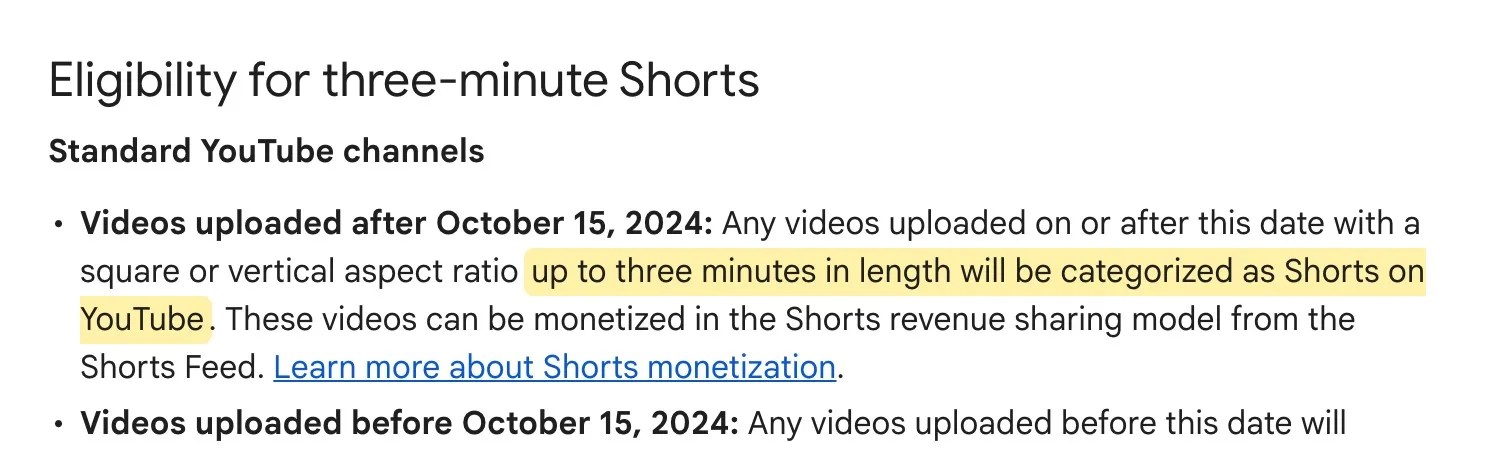
The length change matters more than people realize. YouTube expanded Shorts to three minutes in late 2024, and Instagram followed in January 2025 when Adam Mosseri raised the Reels limit from 90 seconds to three minutes. So “I need more time to explain things” is no longer a reason to pick one over the other.
When you have zero followers, the question isn’t “which app is bigger”. It’s “which app will show my video to strangers?”
On Instagram, Reels are still the main way new people find you. Instagram has talked publicly about watch time, sends (people sharing your Reel in DMs) and likes as the signals it pays attention to, and sends are the one most often linked to reaching people who don’t follow you yet. Instagram also has Trial Reels, which show a Reel to non-followers first so you can test an idea without it landing on your followers’ feeds. Expect lower numbers on trials, since they don’t get that early boost from your followers, and compare them with other trials, not with your normal posts.
On YouTube, the Shorts feed works a lot like TikTok: your video is shown to a small group, and if they watch instead of swiping, it gets shown to more. In YouTube Studio you’ll find a “Viewed vs swiped away” number for each Short, which is the clearest signal you’ll get about whether your opening is working. The other thing YouTube has that Instagram doesn’t is search. People type questions into YouTube every day, and a Short that answers one can quietly pick up views for months.
What this means for you: Reels reward videos people want to send to a friend. Shorts reward videos people stop scrolling for, and videos people search for. Think about which of those your ideas naturally are.
Let’s be honest about this part, because it’s where most comparisons get vague.
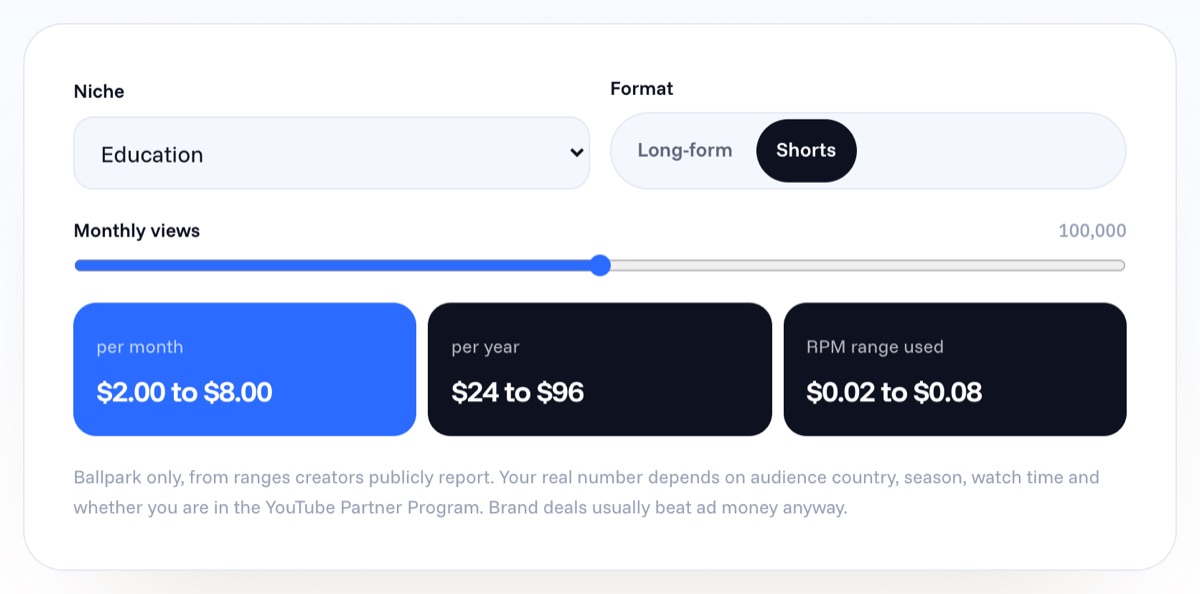
YouTube Shorts pays you directly, eventually. Once you join the YouTube Partner Program, you get a share of Shorts ad revenue. Shorts ads are pooled, and creators keep 45% of their share of that pool, a model YouTube announced when it opened the Partner Program to Shorts. To get in through Shorts alone, you need 1,000 subscribers and 10 million valid public Shorts views in 90 days. That’s a big number, and Shorts pay a lot less per view than long videos, so think of this as a bonus, not a salary. If you want a rough idea of what views turn into, our free Creator Money Calculator shows long-form vs Shorts estimates by niche.
Instagram doesn’t pay you for views in most places. There’s no broad ad revenue share for Reels. Instagram creators make money through brand deals, affiliate links, and selling their own products or services, with features like subscriptions and gifts where they’re available. That sounds worse, but here’s the thing: for a lot of creators, especially in niches where ad rates are low, a single brand deal can pay more than months of Shorts ad revenue. And Instagram is where many brands go looking.
The simple rule: if you want income that grows with views, Shorts is your path. If you want income that comes from people trusting you, Reels is usually faster.
Wondering how the money actually reaches your bank account? We broke down payouts, thresholds and taxes in how creators get paid in 2026.
Here’s what nobody tells you: the two platforms reward slightly different kinds of videos, and one may simply suit how you like to work.
Reels tend to reward:
Shorts tend to reward:
If you love a polished, aesthetic look, Reels will feel natural. If you’d rather talk to camera and teach something, Shorts will probably feel easier.
Still on the fence? Go down this list and stop at the first line that fits you.
Not sure what your niche is yet? Sort that first. Our guide to finding your niche is written for TikTok, but the same steps work for Reels and Shorts.
Once you’ve picked, give it a fair chance:
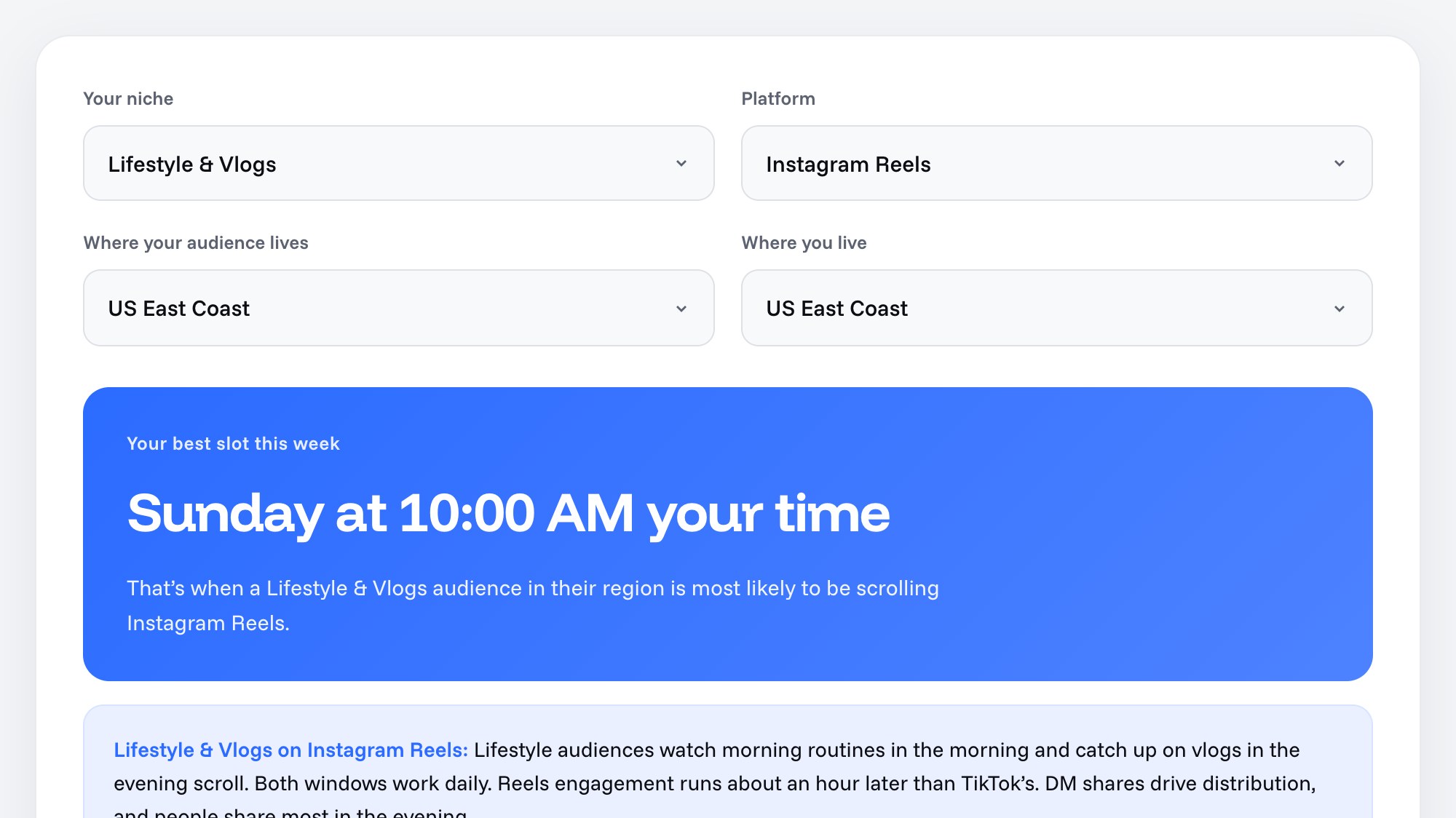
After four weeks, ask yourself two things. Are the numbers trending up, even slowly? And do you still enjoy making these? If both answers are yes, you’ve found your platform.
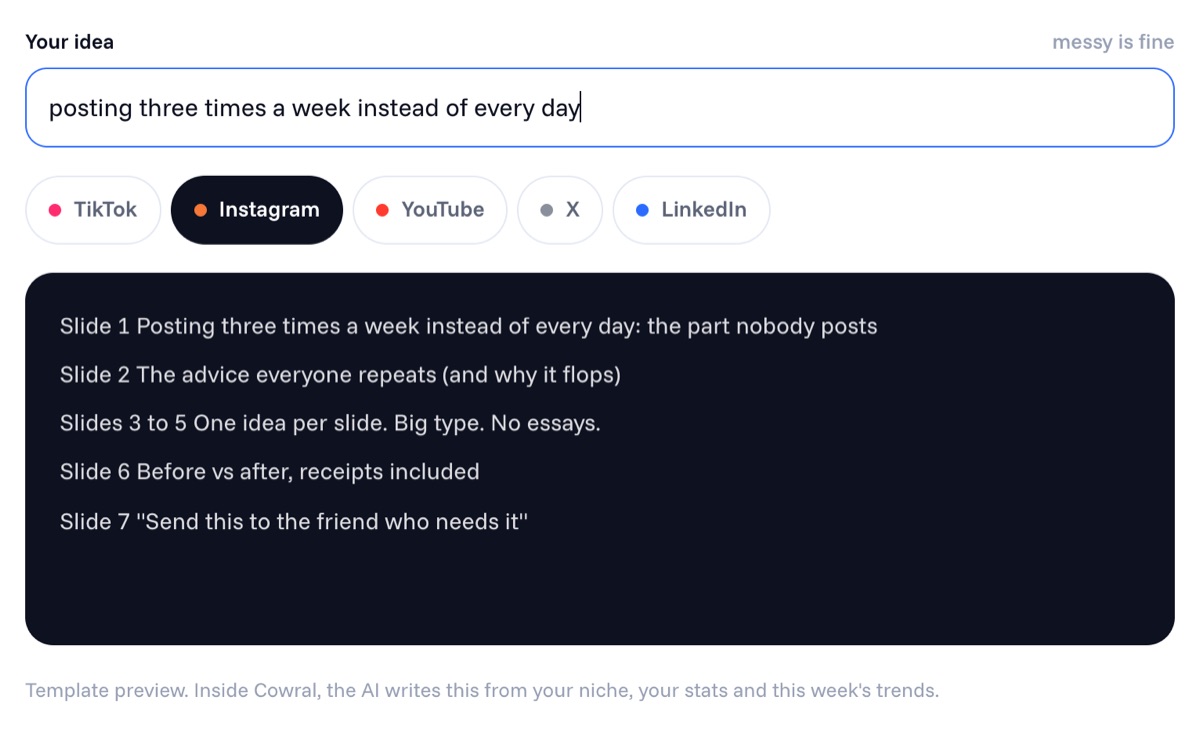
Once your first platform is ticking along, you can add the other one. The trick is not to post everything twice. Instead:
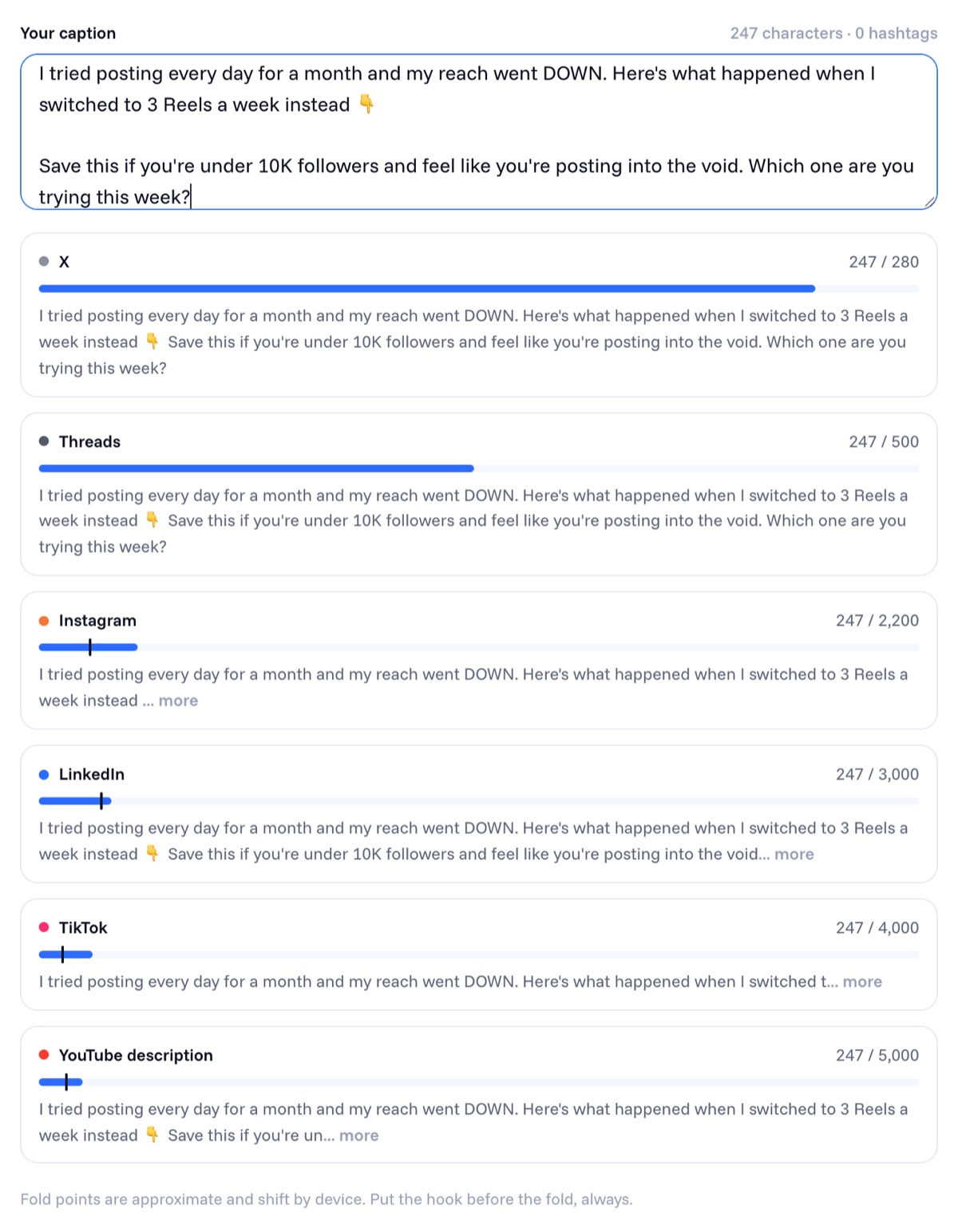
Cowral’s free Cross-post Remixer does most of this for you: paste one idea and it gives you a version written for each platform. If you’re wondering how TikTok fits in, we compared YouTube Shorts vs TikTok for new creators too, and the 2026 Instagram Reels playbook goes deeper on Reels.
Cowral keeps both platforms in one place. Connect your Instagram and YouTube accounts, and the app shows you what’s trending in your niche, turns an idea into a script, and plans your 30-day test on a content calendar with an email reminder before each post. When the month is done, My growth shows you which platform is actually working for you, so the decision isn’t a guess.
You can start free, no card needed.
It depends on how you plan to make money. Shorts is better if you want ad revenue and a path into long YouTube videos. Reels is better if your income will come from brand deals, clients or your own products. If you only have time for one, pick the one that matches your business model.
Not the way YouTube does. Instagram doesn’t share Reels ad revenue broadly, and its bonus programs have mostly been invite-only. US creators on Instagram earn mainly from brand deals, affiliate links, subscriptions and gifts.
Usually tens of dollars, not hundreds, though it varies a lot by niche and audience location. Shorts pay far less per view than long videos. The free Creator Money Calculator gives a ballpark for your niche.
Yes, but post your best videos, upload a clean file without another app’s watermark, and rewrite the first line, caption and title for each platform. Small changes to the opening make a real difference.
Both can be up to 3 minutes long. YouTube raised the Shorts limit to 3 minutes in October 2024, and Instagram raised the Reels limit to 3 minutes in January 2025.
To earn Shorts ad revenue, you need to join the YouTube Partner Program with 1,000 subscribers and either 10 million valid public Shorts views in the last 90 days or 4,000 long-form watch hours in the last 12 months.

Olu Sam is an SEO expert and social media content creator who built over 50K followers across his social media pages in less than a year of creating content.
LinkedIn ProfileHow we research and fact-check TikTokFood creators on TikTok in 2026: how to grow a recipe account people actually cook fromA 2026 playbook for food creators on TikTok, covering what the Creator Rewards Program pays for, hooks and captions that work for recipes,...
 YouTubeTech YouTube in 2026: a channel strategy for small creators who review, explain and buildHow to grow a small tech YouTube channel in 2026, from picking a buyer instead of a gadget and writing titles that don't get cut off to the...
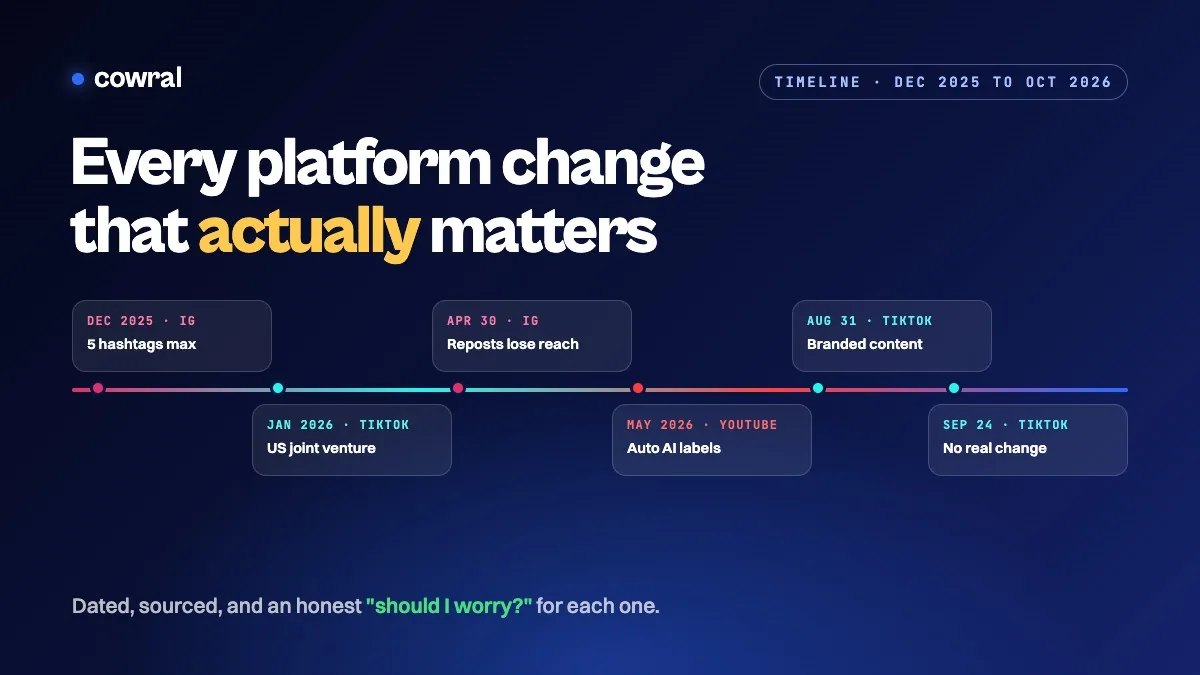 InstagramAlgorithm and policy changes creators need to know in 2026: a dated timelineEvery TikTok, Instagram and YouTube change that actually matters for creators in 2026, in date order, with sources, what each one means for...