10 free tools. Zero signups. Your files never leave your browser.Open the Viral Lab →
How to start and grow a finance TikTok in 2026: lanes that work, formats, hooks, the FTC and SEC rules on promoting money products, and how creators get paid.
Money is one of the few topics people search for on TikTok with their wallet already open. Someone types “how to pay off credit card debt” or “is a high-yield savings account worth it” at 11pm, and the creator who answers clearly, in under a minute, gets a follow that actually means something. It’s also one of the few niches where brands will pay real money for a small account.
The catch is that finance TikTok has rules other niches don’t. Promote the wrong thing, or forget to disclose a sponsor, and you’re not just risking a strike from TikTok. The FTC, the SEC and European regulators have all called out influencers by name. So this playbook does two jobs: how to grow a finance TikTok in 2026, and how to stay on the right side of the people who can fine you.
Key takeaways
People use TikTok as a search engine for everyday money questions, and finance answers get saved and sent more than almost anything else. A video that explains how a Roth IRA works or what a Fed rate cut means for your savings account has a long shelf life, because people come back to it when the question becomes urgent.
Finance also pays better than most niches once you get to brand deals and long-form video. Advertisers want people who are already thinking about money. That doesn’t mean every finance account is rich. It means the same 10,000 followers can be worth more here than in comedy or gaming, as long as they trust you.
The trade-off is trust. A beauty creator who recommends a bad serum loses a follower. A finance creator who pushes a token that collapses can lose their audience, their reputation and, depending on what they promoted, a lot more.
The quickest way to stall is to post about “money” in general. Narrow it the same way you’d find any TikTok niche: a topic, a specific person, and your angle.
| Lane | Who it’s for | Risk level | Notes |
|---|---|---|---|
| Budgeting and saving | New grads, young families, first apartments | Low | Great for beginners. Real budgets on screen do well. |
| Paying off debt | People with credit card or student loan debt | Low to medium | Very shareable. Avoid promoting specific lenders unless they’re approved partners. |
| Side hustles | People with a 9 to 5 | Medium | Steer clear of anything that sounds like “make $5,000 a week from your phone”. |
| Credit cards and points | Travelers and deal hunters | Medium | Card affiliate programs pay well but come with strict disclosure rules. |
| Investing education | Beginners curious about index funds, 401(k)s and IRAs | High | Explain how things work. Don’t tell people what to buy. |
| Crypto | Traders and the crypto-curious | Highest | The lane regulators watch most closely. |
None of these are off limits. But the further down the table you go, the more you need to know the rules before you post, not after.
Finance is dry when it’s talking heads and abstract advice. It works when people can see the numbers. A few formats that consistently travel:
Show the math on screen. Screen-record a savings calculator, a paycheck with the personal details blurred, or a spreadsheet. “Here’s what a $4,000 paycheck looks like after rent, car payment and student loans” beats any amount of “you should budget”.
Myth vs fact. Take one thing people say (“you need a lot of money to start investing”) and show what’s actually true, with a source on screen. It invites comments from people who disagree, which helps.
“What I would do with…” Frame it as your own plan, not instructions: “If I got a $3,000 tax refund and had credit card debt, here’s how I’d split it.” It’s relatable, and it keeps you on the education side of the line.
Explain the news in 45 seconds. When the Fed moves rates, a bank changes its fees, or tax brackets get updated, the first clear explainer wins. These videos also bring in search traffic for weeks.
Series. Part 1, part 2, part 3 of “building a $10K emergency fund” gives people a reason to follow instead of just watching once.
Keep a source on screen
When you mention a rate, a fee or a rule, flash the source for a second, even just the bank’s page or IRS.gov. It costs nothing, protects you when someone says you’re wrong, and quietly signals that you’re not one of the “trust me bro” accounts.
Finance hooks fail in a predictable way: they’re either too vague (“money tips you need”) or too hypey (“this will make you rich”). The ones that work are specific about the person and the number.
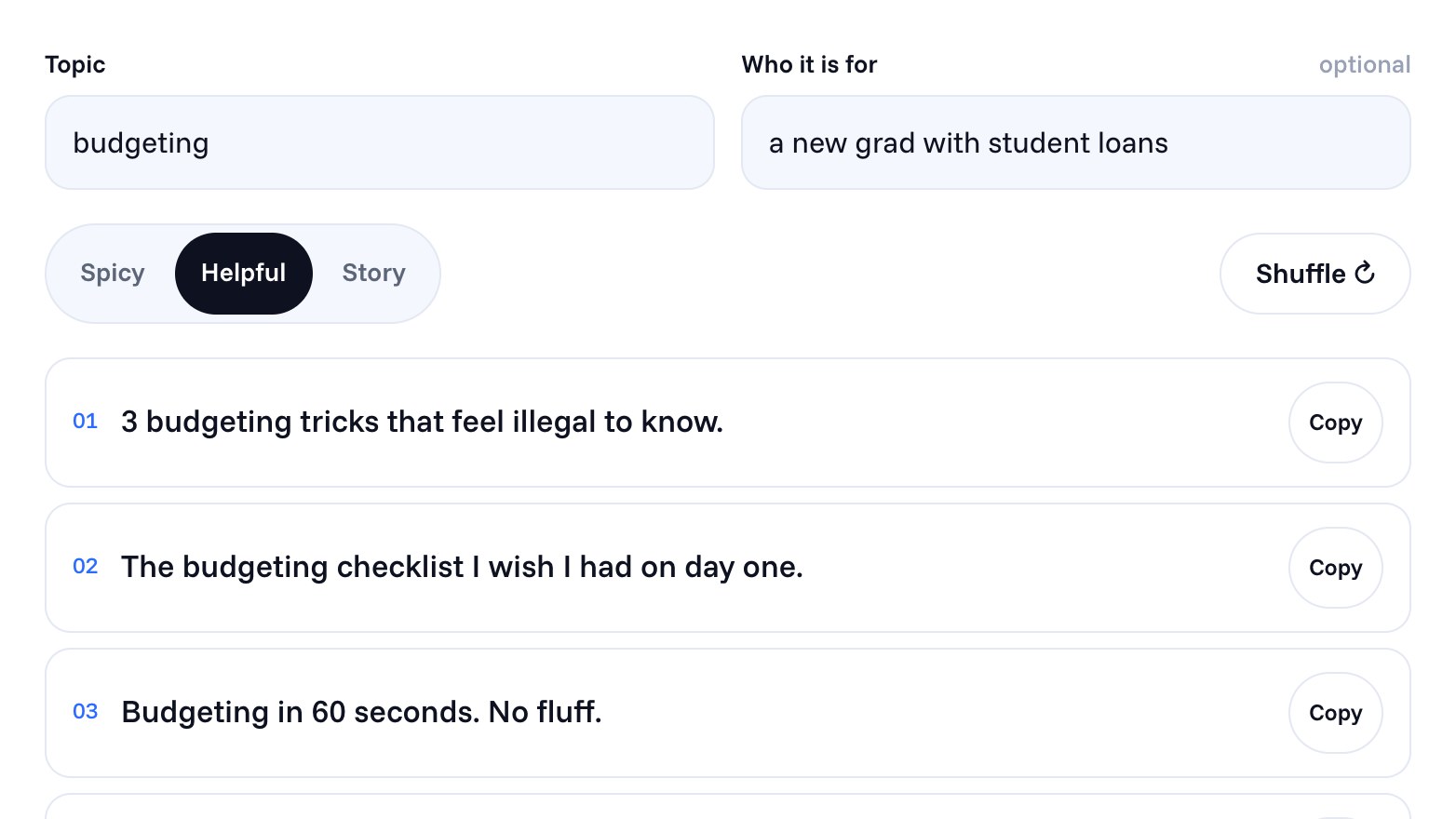
Keep the hook on screen as text, too. Lots of people watch with the sound off, and a number in the first frame stops them. If your views keep stalling in the low hundreds, run your opening through the 5-second hook test before you change anything else. Stuck for openers? The free Hook Generator gives you ten for any money topic.
This is the part most finance TikTok guides skip. It’s also the part that can actually hurt you. What follows is general information, not legal advice.
Education is not the same as promotion. Explaining how a Roth IRA works is education. Telling your followers to buy a particular stock or token, especially one you’re being paid to mention, is a promotion, and that’s where regulators get involved.
TikTok’s own rules. TikTok’s Branded Content Policy, published in August 2026, bans branded content for pyramid schemes, multi-level marketing, too-good-to-be-true financial offers, payday loans and get-rich-quick schemes. Loans, credit cards, insurance, investment services and money management are restricted: you can only do branded content for them with an invitation from an approved brand, and in many markets it’s limited to adults in the country where you posted.
The FTC: disclose every paid connection. If a brand paid you, gave you something free, or you have any other connection to it, the FTC expects you to say so clearly, in the video itself and not buried in hashtags. Its Disclosures 101 for social media influencers is a five-minute read and worth it. Use TikTok’s content disclosure setting too.
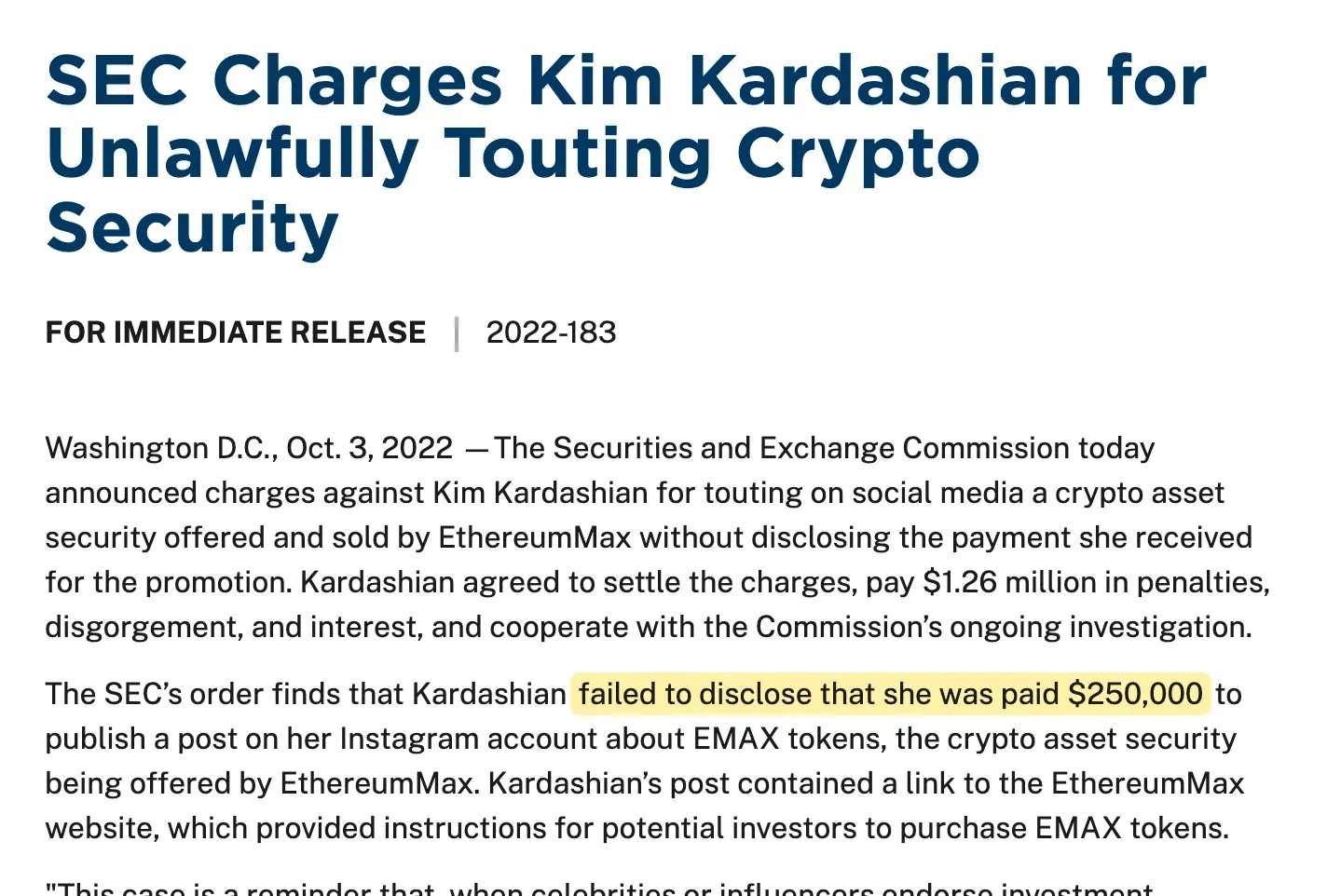
The SEC: say what you were paid to promote investments. Promoting a security for payment without disclosing it can break federal securities law. The best-known example is the SEC’s case against Kim Kardashian, who agreed to pay $1.26 million in 2022 after promoting a crypto token on Instagram without disclosing she’d been paid $250,000 for the post (SEC press release). If a broker or investment adviser pays you, expect their compliance team to review your content, because they’re on the hook for it too.
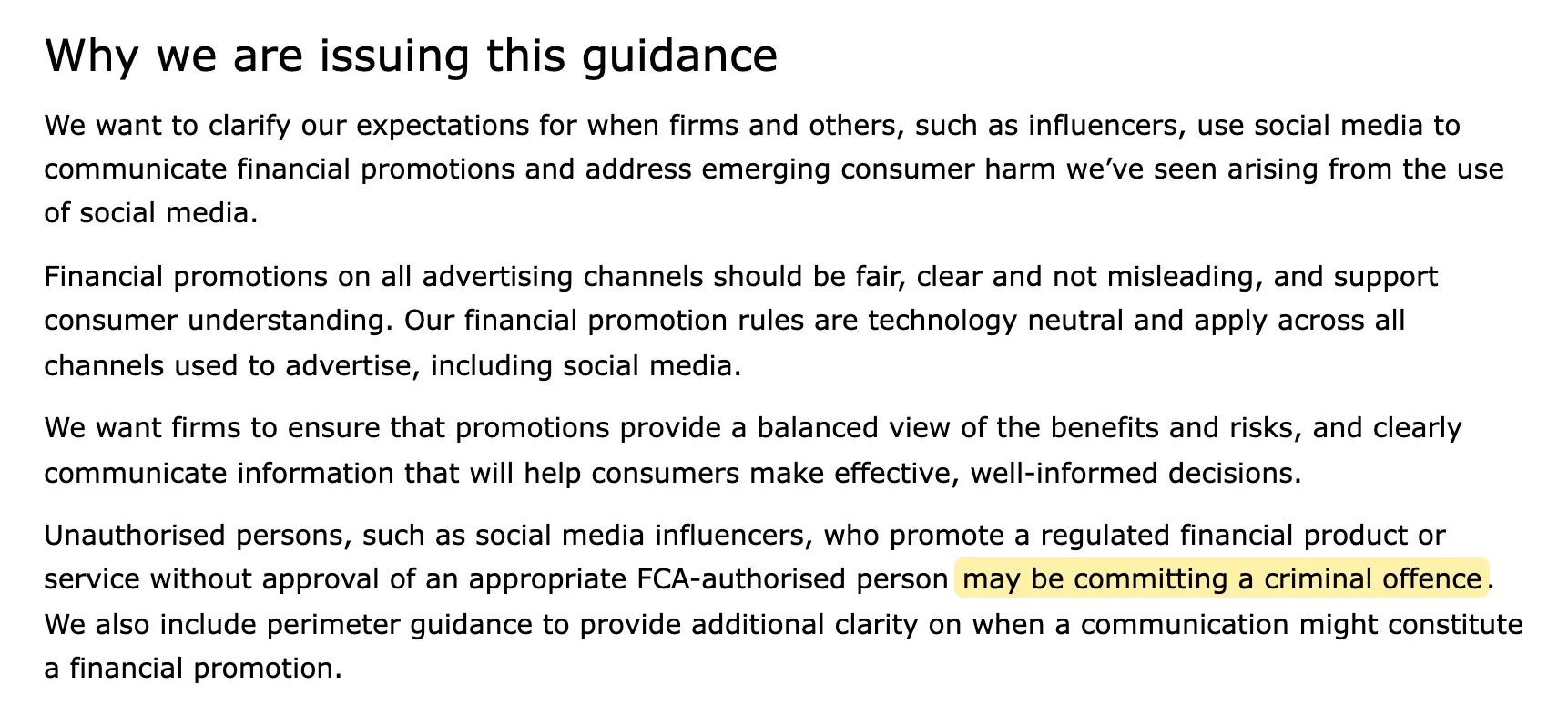
Europe and the UK. In 2024 the EU’s markets regulator, ESMA, warned that finfluencers who post investment recommendations must follow market abuse rules, including disclosing conflicts of interest, and that misleading posts can be prosecuted in some countries (Euronews). In the UK, the FCA’s finalized guidance on financial promotions on social media makes clear that influencers who share an illegal financial promotion can commit a criminal offense.
"Not financial advice" won't save you
Adding “NFA” to a caption doesn’t turn a promotion into education. If you’re paid to push a product and don’t disclose it, a disclaimer at the end doesn’t change what the video is. When in doubt, don’t take the deal.
TikTok payouts aren’t where finance money comes from. These are, roughly in order of how quickly they tend to pay off:
Brand deals with legitimate companies. Banks, fintech apps, budgeting tools and brokerages all pay creators. Check that they’re who they say they are (FDIC-insured banks, SEC- or FINRA-registered brokers), ask whether the campaign needs approval under TikTok’s policy, and always disclose.
Affiliate programs. Credit card, savings account and budgeting app affiliates can pay well per signup, but issuers usually have strict rules on what you can claim. Follow their scripts.
Your own products. Budget templates, a short course on paying off debt, or a paid newsletter. These often pay better per follower than any brand.
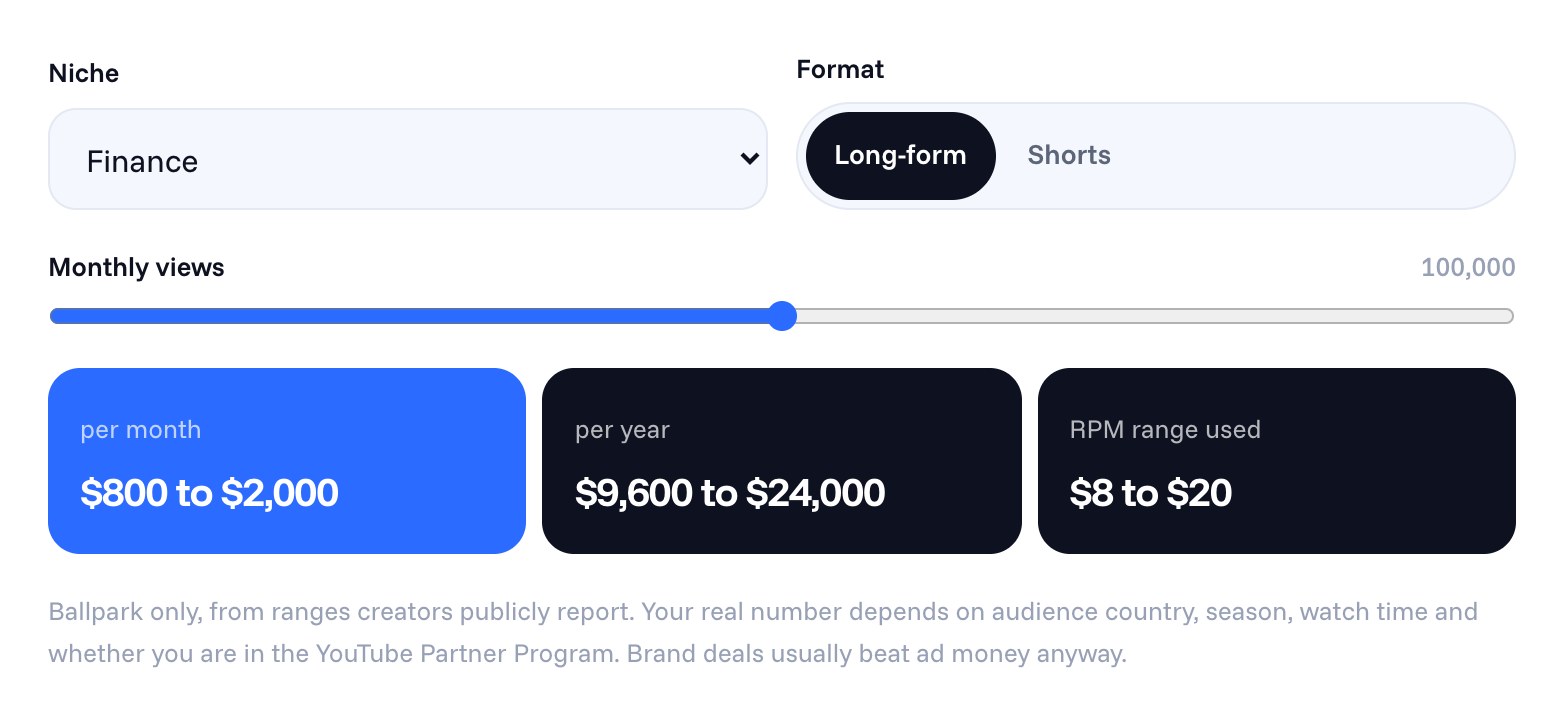
Long-form YouTube. Finance is one of the better-paying niches for YouTube ads, so many finance TikTokers repurpose their best short videos into longer explainers. The free Creator Money Calculator gives you a rough idea of what finance views can earn on YouTube compared with Shorts.
Getting paid, and taxed. Our guide to how creators get paid in 2026 covers AdSense payouts, brand deal invoices, 1099s and quarterly taxes.
You don’t need to post every day. Three good finance videos a week beats seven rushed ones, especially when each one involves checking a number. Batch your research on one day, film on another, and keep a running list of questions from your comments, because those are your next videos.
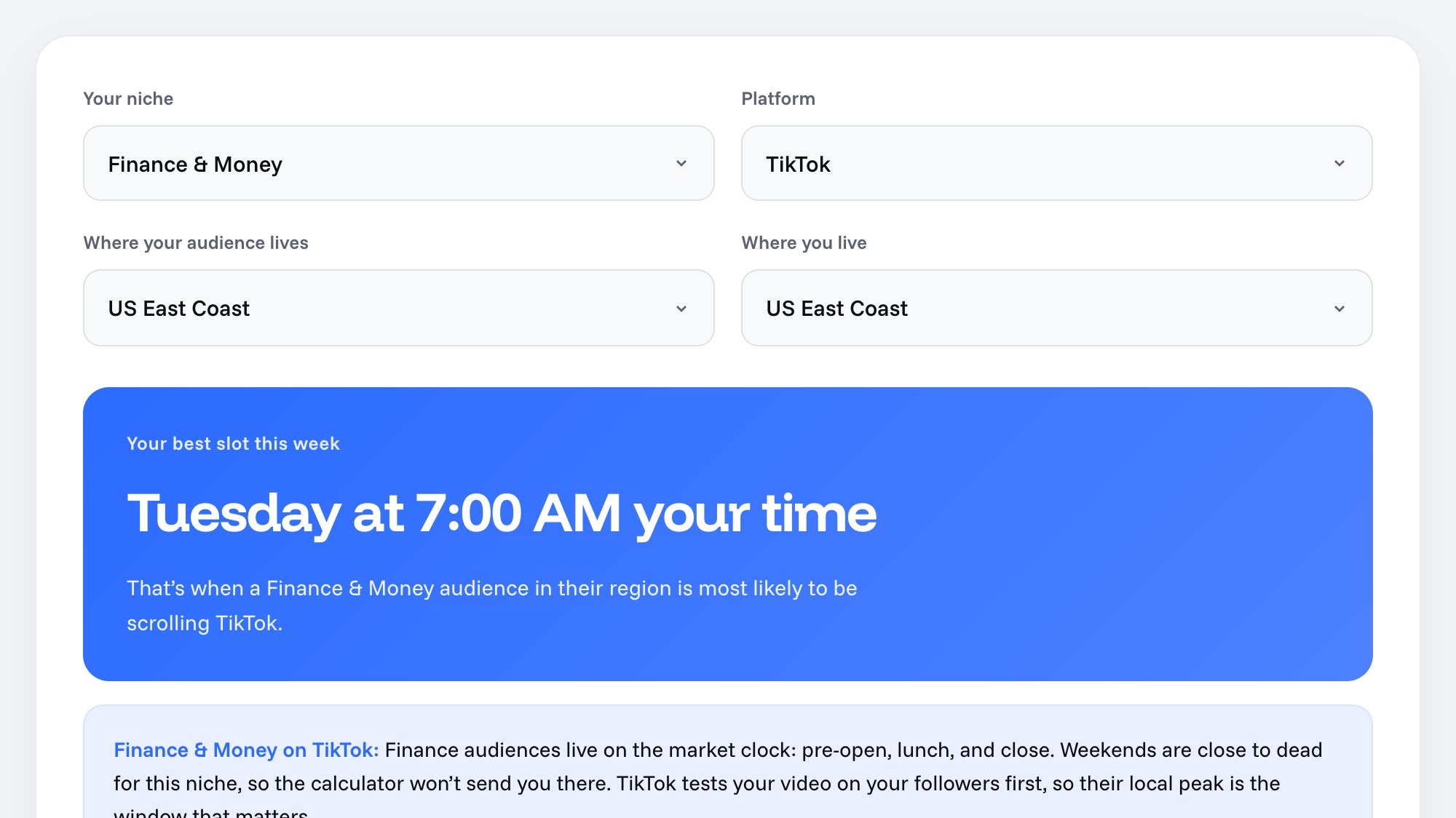
Post when your people are actually free to watch, which depends on where they live and what they do all day. The free Best Time to Post calculator works out the windows for a finance audience in your time zone.
Set your niche to finance in Cowral and you’ll see the money topics rising in your area every day, with a trend speed score so you can catch the explainer moment early. Turn a trend into a script in a couple of taps, plan three videos a week on the content calendar, and get a reminder before each one. My growth then shows which formats are building followers, not just views.
You can start free, no card needed.
Mostly through brand deals with banks and fintech apps, affiliate programs for credit cards and savings accounts, their own products like templates and courses, and YouTube ad revenue on longer videos. TikTok’s own payouts are usually a small share.
Not for general education, like explaining how budgeting, credit scores or index funds work. Giving personalized investment advice for pay can require registration as an investment adviser, so keep your content general and don’t tell individuals what to buy.
Not on its own. It can set expectations, but it doesn’t change what a video is. If you’re paid to promote something and don’t disclose it, the disclaimer won’t protect you.
Turn on TikTok’s content disclosure setting, say it out loud in the video (“this is sponsored by…”), and put it at the start of your caption. The FTC wants the disclosure to be hard to miss, not hidden in a pile of hashtags.
Be very careful. TikTok restricts financial branded content, and US regulators have fined influencers who promoted crypto tokens without disclosing they were paid. If you do it, disclose clearly and only work with legitimate, registered companies.
It varies hugely. Two accounts with the same following can earn very different amounts depending on their niche, how much their audience trusts them, and whether they have their own products. Brand deals and affiliates usually make up most of it.

Olu Sam is an SEO expert and social media content creator who built over 50K followers across his social media pages in less than a year of creating content.
LinkedIn ProfileHow we research and fact-check TikTokFood creators on TikTok in 2026: how to grow a recipe account people actually cook fromA 2026 playbook for food creators on TikTok, covering what the Creator Rewards Program pays for, hooks and captions that work for recipes,...
 YouTubeTech YouTube in 2026: a channel strategy for small creators who review, explain and buildHow to grow a small tech YouTube channel in 2026, from picking a buyer instead of a gadget and writing titles that don't get cut off to the...
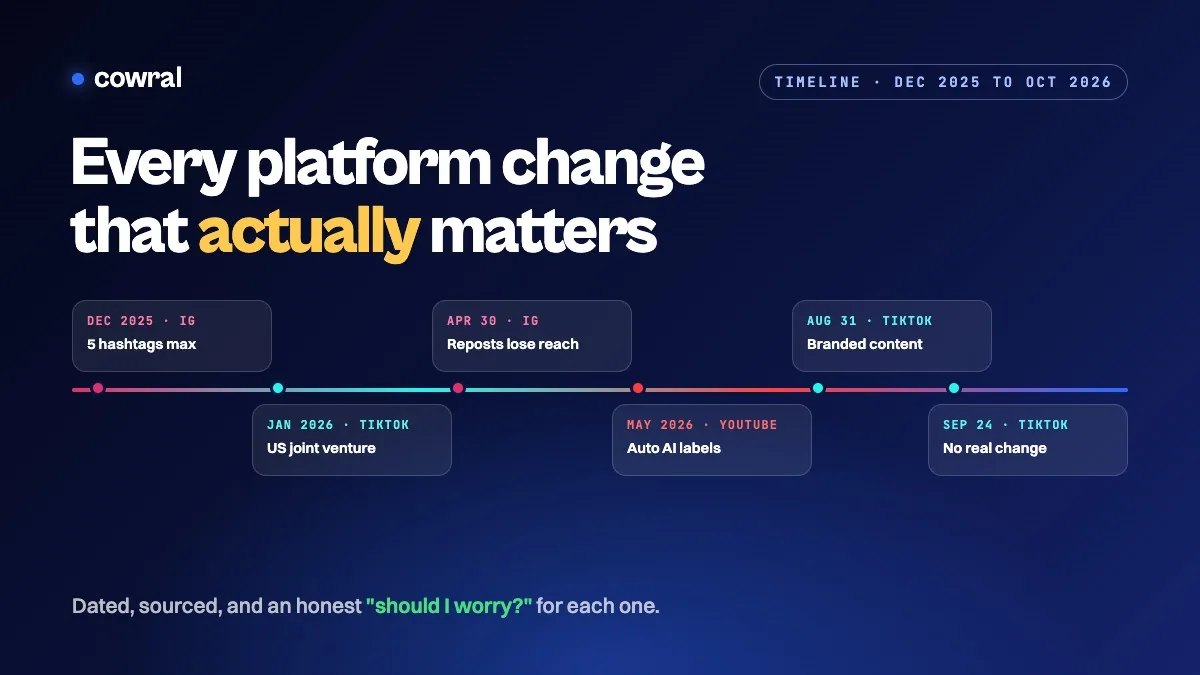 InstagramAlgorithm and policy changes creators need to know in 2026: a dated timelineEvery TikTok, Instagram and YouTube change that actually matters for creators in 2026, in date order, with sources, what each one means for...