10 free tools. Zero signups. Your files never leave your browser.Open the Viral Lab →
A simple 4-part Reels hook formula built around how Instagram ranks in 2026, with examples by niche, a cover check and a free way to test it on strangers first.
A video does 40k on TikTok. You save it, upload it to Instagram the same evening, and by the next morning it’s sitting on 380 views and six likes, two of them from people you went to high school with.
The easy conclusion is that Instagram has it in for you. The more useful one is that the opening was written for a different app. Both platforms care whether people keep watching. Instagram also leans hard on something a TikTok hook almost never thinks about, which is whether someone sends your Reel to a friend in their DMs.
So instead of another list of 50 hooks to copy, this is one Reels hook formula, the reasoning behind it, six worked examples, a check for your cover that most people skip, and a way to try new openings on strangers before your followers ever see them.
Key takeaways
Start with what Instagram has said about ranking. In early 2025, Adam Mosseri, who runs Instagram, named three signals that matter most: watch time, likes per reach, and sends per reach. Sends are DM shares. He’s also said they carry a lot of weight when Instagram decides whether to show a Reel to people who don’t follow you yet.
A lot of TikTok hooks are built purely for watch time. Tension, a cliffhanger, “wait for it”. That keeps people watching, which helps on both apps. But a cliffhanger gives nobody a reason to forward the video. People watch “you won’t believe what happened next”. They send “the invoice mistake every new freelancer makes” to the friend who just went freelance.
That doesn’t mean cliffhangers are dead on Instagram. If the payoff is genuinely funny or useful, people will still send it. The point is that on Reels, the share has to be earned somewhere, and the opening is the cheapest place to set it up.
There’s also the originality issue. Instagram said in 2025 that it would rank original content above reposts, and in April 2026 it widened that to the whole app. It can’t actually know who made a video, so it uses systems that try to predict it. A file with another app’s watermark, or a clip Instagram has already seen elsewhere on the platform, can look less original to those systems. Your hook could be perfect and the upload still starts behind.
It takes about three seconds on screen and maybe two minutes to plan.
People decide whether to stop before you’ve said a word, so the first frame is part of the hook. Open in the middle of the action: oil already hot in the pot, the messy room before you touch it, a price tag already in shot. A slow zoom, a logo sting, or you adjusting the phone after pressing record all cost you viewers you’ll never see in your analytics.
The first sentence should be the most interesting one in the video, and a short version of it should be on screen as text. Mosseri has recommended text on screen because plenty of people scroll with the sound off. Keep it short enough to read in one glance, roughly six to ten words.
Placement matters more than people think. Instagram puts its like, comment and share buttons down the right side and your caption along the bottom. Text in those areas gets covered on a lot of phones. Keep it in the upper-middle of the frame.
The thumb test
Before you post, play the Reel in the preview and cover the right edge and the bottom fifth of the screen with your thumb. If any of your hook text disappears, move it up.
Mosseri has also said a hook doesn’t need to be a cliffhanger. It needs to grab attention and set expectations. That’s a relief, honestly. You don’t have to be mysterious. “Three swaps that make taco night taste like your favorite taqueria” tells people exactly what they’re waiting for, and then they wait for it.
This is the bit TikTok hooks usually leave out. Somewhere early, make it obvious who the video is for. “If your sister just started her first 9 to 5.” “For anyone still paying for three streaming apps.” Naming the person makes viewers think of a real someone, and that’s where sends come from.
Don't beg for the send
Naming who it’s for is different from begging. “Send this to 5 friends” at the start reads as bait and tends to make people scroll faster. Describe the person and let viewers do the rest.
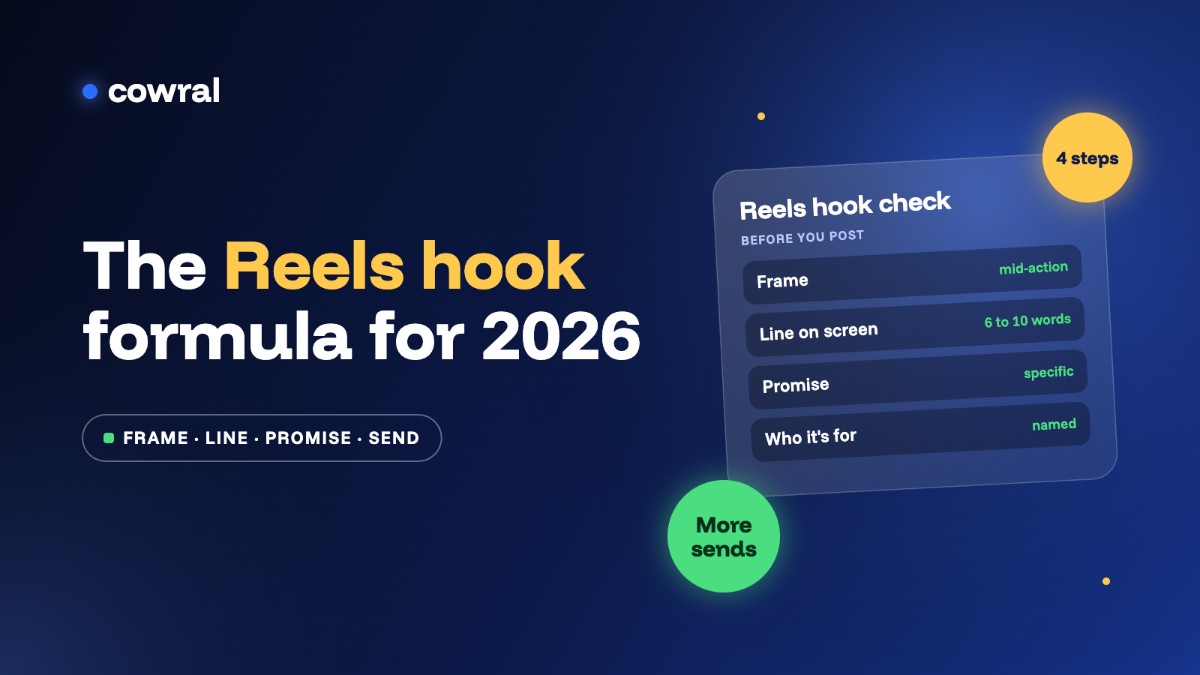
You won’t always need all four in one sentence. Often the first frame and the on-screen text cover Frame and Line, and the spoken sentence handles Promise and Send.
| Niche | First frame | On-screen line | Who ends up getting sent it |
|---|---|---|---|
| Food | Tortillas warming in the pan, steam rising | “Taco night at home: 3 swaps” | The friend whose tacos always fall apart |
| Personal finance | Banking app open on a sad balance | “Where my paycheck went in 6 days” | Whoever is broke by the 7th of every month |
| Fitness | Mid-squat, no warm-up shown | “Knee pain on squats? Check your feet first” | The gym partner who keeps complaining |
| Beauty | Half the face done, half bare | “Same foundation, two methods” | The friend who asked what you use |
| Career | A rejection email on screen | “The résumé line recruiters skip past” | The job-hunting group chat |
| Tech | Phone on 4% at 3pm | “4 settings quietly draining your battery” | Their mom. Every time. |
Same idea, two openings
On TikTok: “I tried every taco night hack on the internet. Only one actually worked.”
On Reels: Pan already hot, text on screen reading “Taco night at home: 3 swaps”, and the spoken line “If you’re the one hosting taco night this weekend, save yourself the stress.”
The TikTok version runs on curiosity. The Reels version promises something specific and names the person who should get it.
None of these are clever. They’re specific, and specific hooks tend to hold people and hand them someone to forward it to.
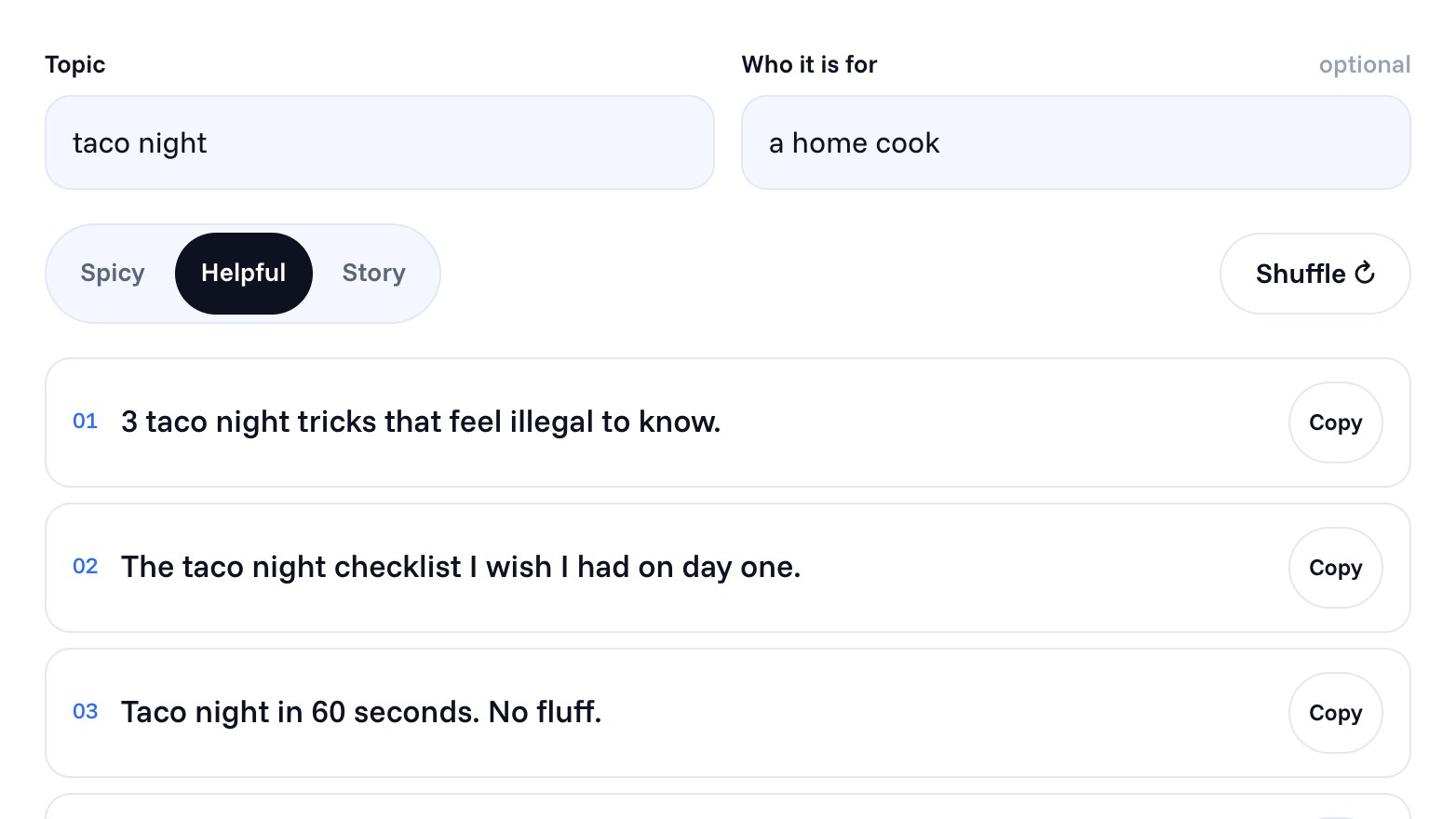
If you’re stuck for openers, the free Hook Generator gives you ten for any topic in three styles. Treat them as raw material: pick the closest one, then add a first frame and a “who it’s for” line yourself.
Some Reels don’t need a spoken or written hook at all. Satisfying cleaning clips, slow cooking shots, a dance trend, a gorgeous travel frame. In those, the first frame is the whole hook, and slapping text on it can make it feel like an ad. If your niche lives on visuals, put all your effort into Frame and let the rest go.
The formula earns its keep on talking, teaching and storytelling Reels, which is most of what small creators post.
The hook also has to work on your profile, because that’s where a new viewer goes to decide if you’re worth following.
Early in 2025, Instagram switched the profile grid from squares to taller 3:4 rectangles. Reels still play at 9:16, so the grid crops your cover at the top and bottom. Your Reels tab can show it differently again. If your cover text sits near the top edge, it may be cut in half on the main grid.
Keep cover text and faces in the middle of the frame. After posting, open your own profile and look. If the grid looks like a row of random screenshots, the people landing there from a good Reel won’t know what your account is about.
Before rewriting yet another opening, rule these out:
If retention falls off a cliff in the first couple of seconds on video after video, then yes, it’s the hook. The 5-second test in our guide to why TikTok hooks don’t land works just as well on Reels.
Trial Reels let you show a Reel to people who don’t follow you before it goes to your followers. Meta has said they’re for professional accounts, and the rollout has been patchy, so if you don’t see the Trial toggle under the caption box, check you’re on a creator or business account and give it time.
A low-effort way to use them:
Two things about Trial Reels
One test proves very little. Small numbers swing around for reasons that have nothing to do with you. Run it across five or six videos and patterns start to show.
You don’t have to pick one app forever, though if you’re stretched thin, our Reels vs Shorts guide will help you choose where to start. When you do post the same idea in more than one place, change the opening instead of uploading the same file everywhere.
On TikTok you can lean further into tension and curiosity. On Reels, add the “who it’s for” line, keep text clear of the buttons, and check the cover. The free Cross-post Remixer shows how one idea turns into a TikTok script, an Instagram carousel and a Short, which saves you rewriting from zero each time.
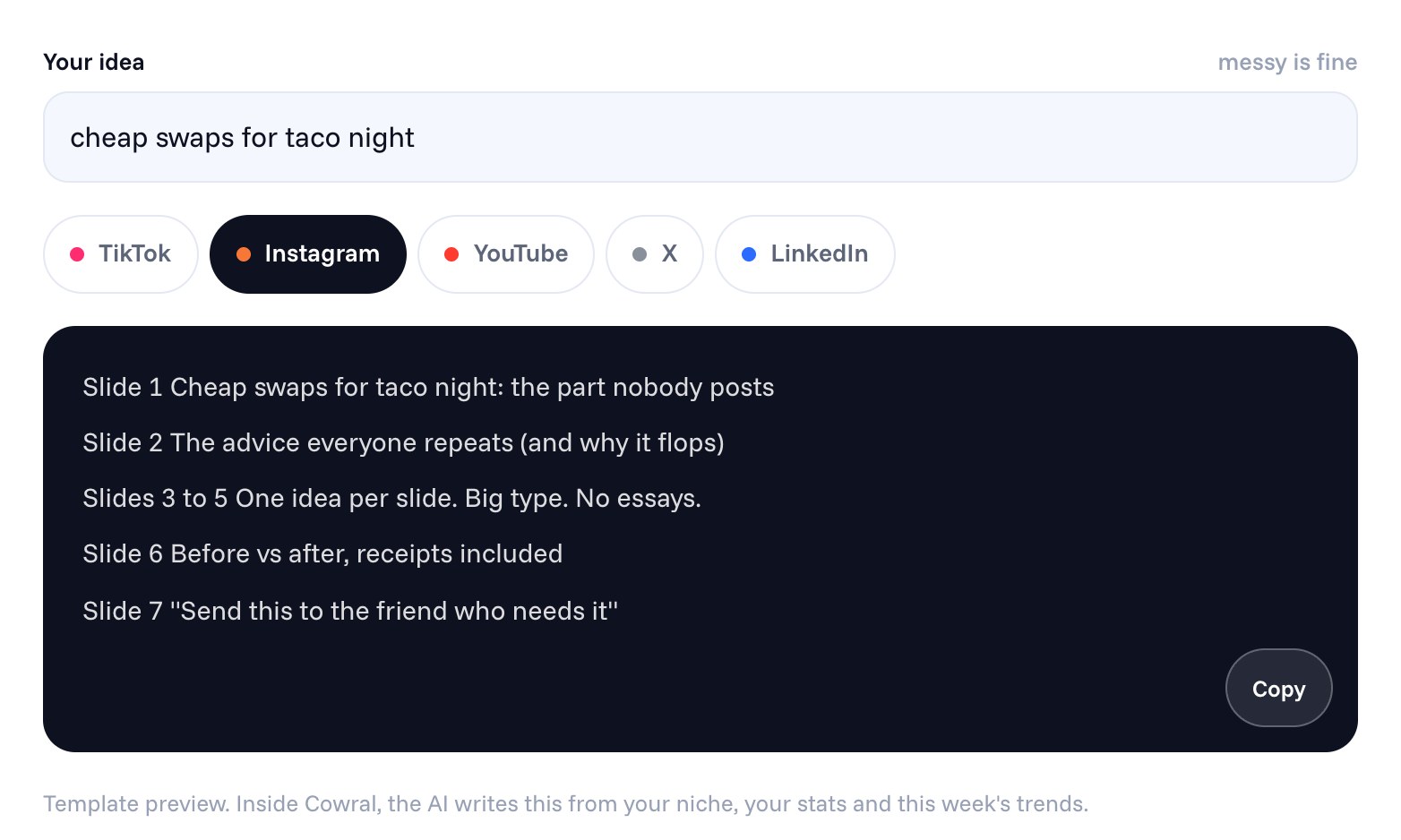
Cowral writes hook options from your niche, your recent posts and what’s trending this week, then helps you turn one idea into versions for TikTok, Instagram and YouTube. You still choose the opening and film it your way. It just means you’re not staring at an empty notes app at 11pm.
You can start free, no card needed.
One that’s specific and quick. Show something worth stopping for in the first frame, say the point in one short line, put that line on screen, and make it clear who the video is for so people have a reason to send it on.
Get the point across in the first two or three seconds. You’ll see blogs quote exact retention targets for the first three seconds, but Instagram hasn’t published one, so don’t chase a made-up number. Just get to it faster.
Sometimes. Both apps reward people watching, but Instagram also weighs sends and ranks original uploads above reposts. Rewrite the opening for Reels, add who it’s for, and upload a clean file without another app’s watermark.
For talking and teaching Reels, yes, because a lot of people scroll muted. Keep it short and away from the right-hand buttons and the caption area. For purely visual Reels, text can get in the way.
It matters most on your profile, where new visitors decide whether to follow. The grid is 3:4 now, so keep cover text and faces near the middle.
Use Trial Reels if your account has them. Post two versions of the same video with different openings to non-followers, compare watch time and sends, and share the winner. Repeat over several videos before you trust the result.

Olu Sam is an SEO expert and social media content creator who built over 50K followers across his social media pages in less than a year of creating content.
LinkedIn ProfileHow we research and fact-check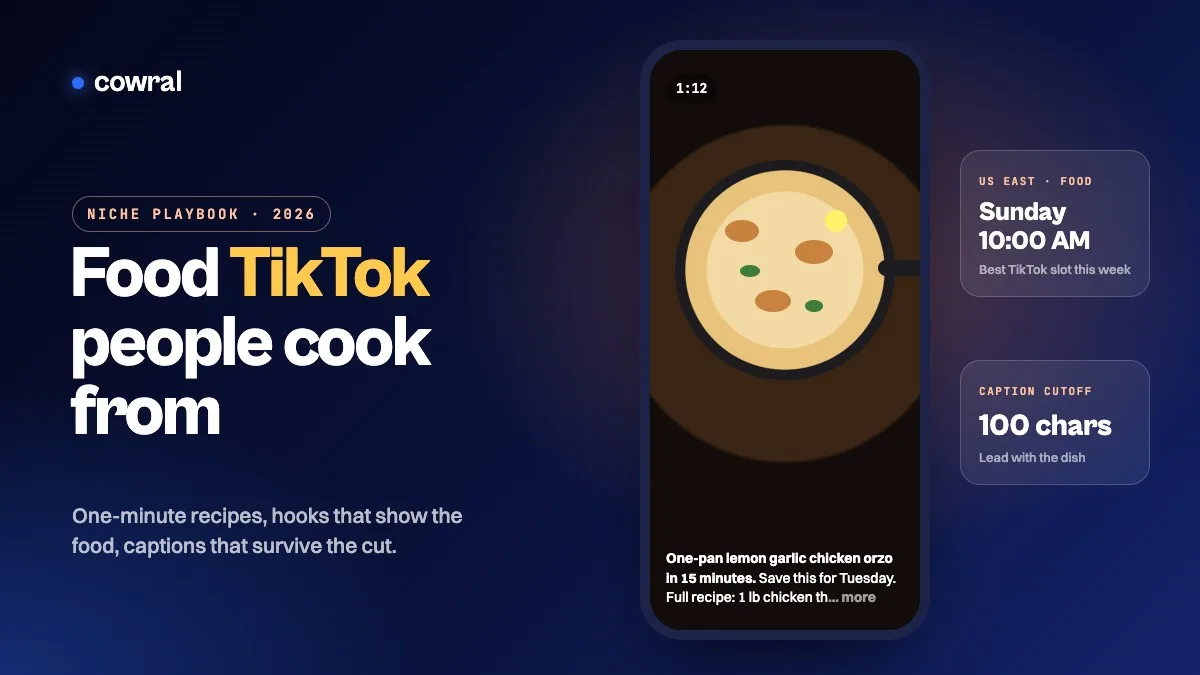 TikTokFood creators on TikTok in 2026: how to grow a recipe account people actually cook fromA 2026 playbook for food creators on TikTok, covering what the Creator Rewards Program pays for, hooks and captions that work for recipes,...
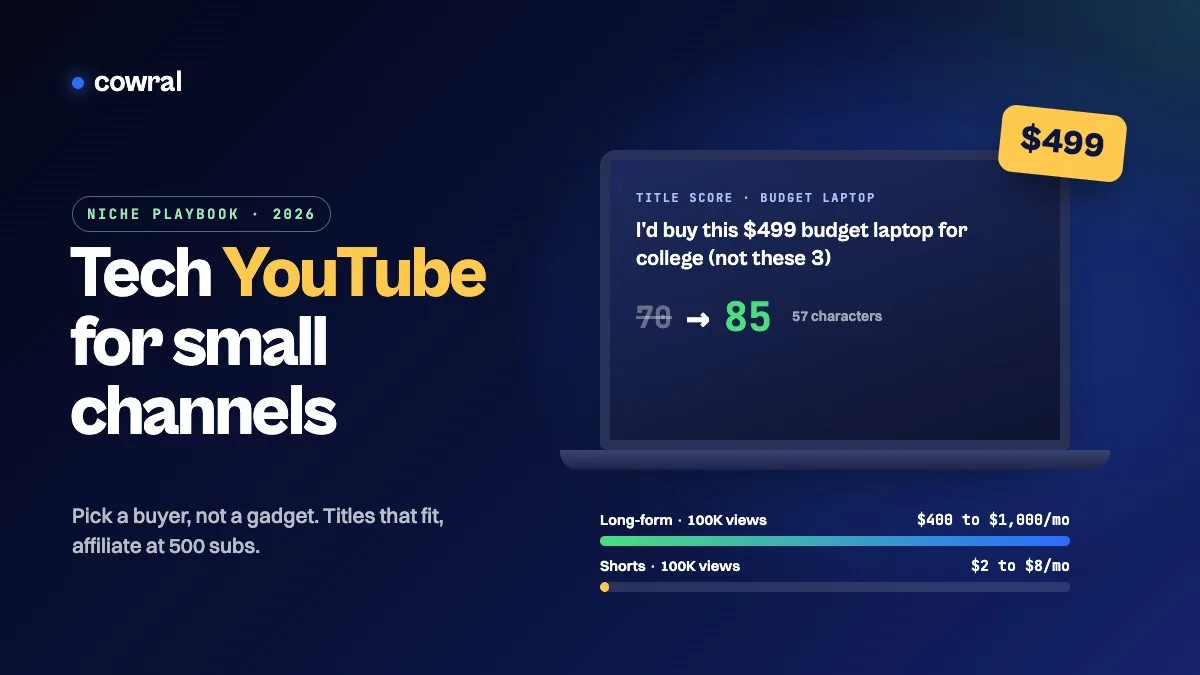 YouTubeTech YouTube in 2026: a channel strategy for small creators who review, explain and buildHow to grow a small tech YouTube channel in 2026, from picking a buyer instead of a gadget and writing titles that don't get cut off to the...
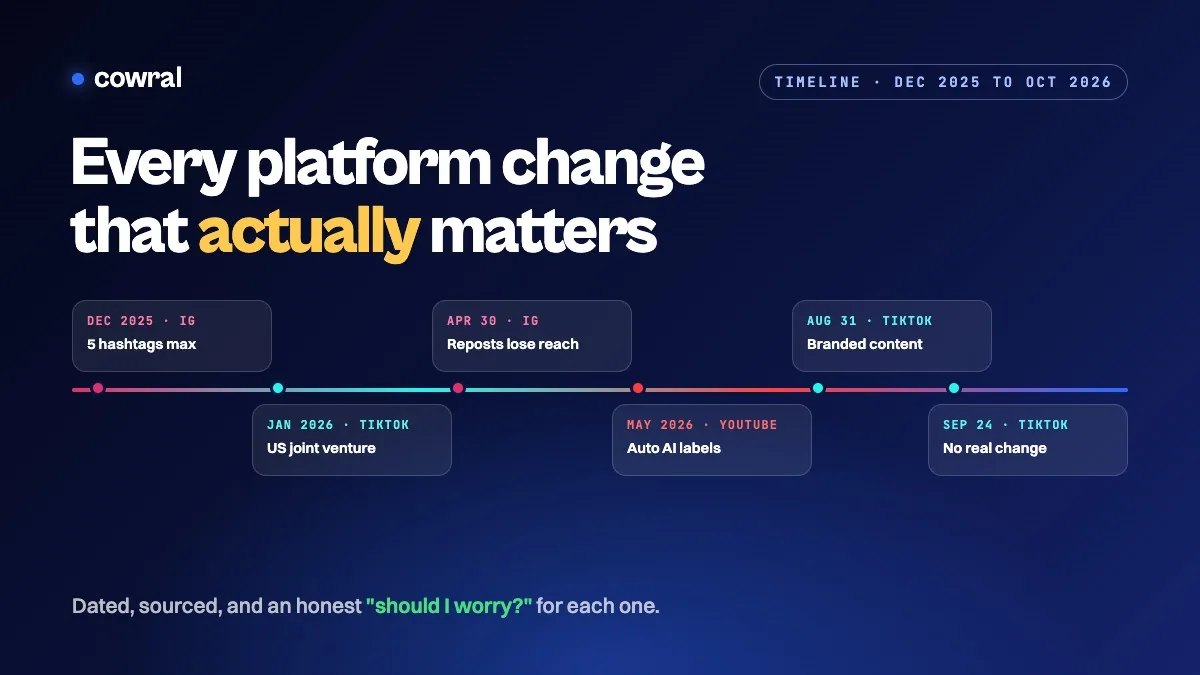 InstagramAlgorithm and policy changes creators need to know in 2026: a dated timelineEvery TikTok, Instagram and YouTube change that actually matters for creators in 2026, in date order, with sources, what each one means for...